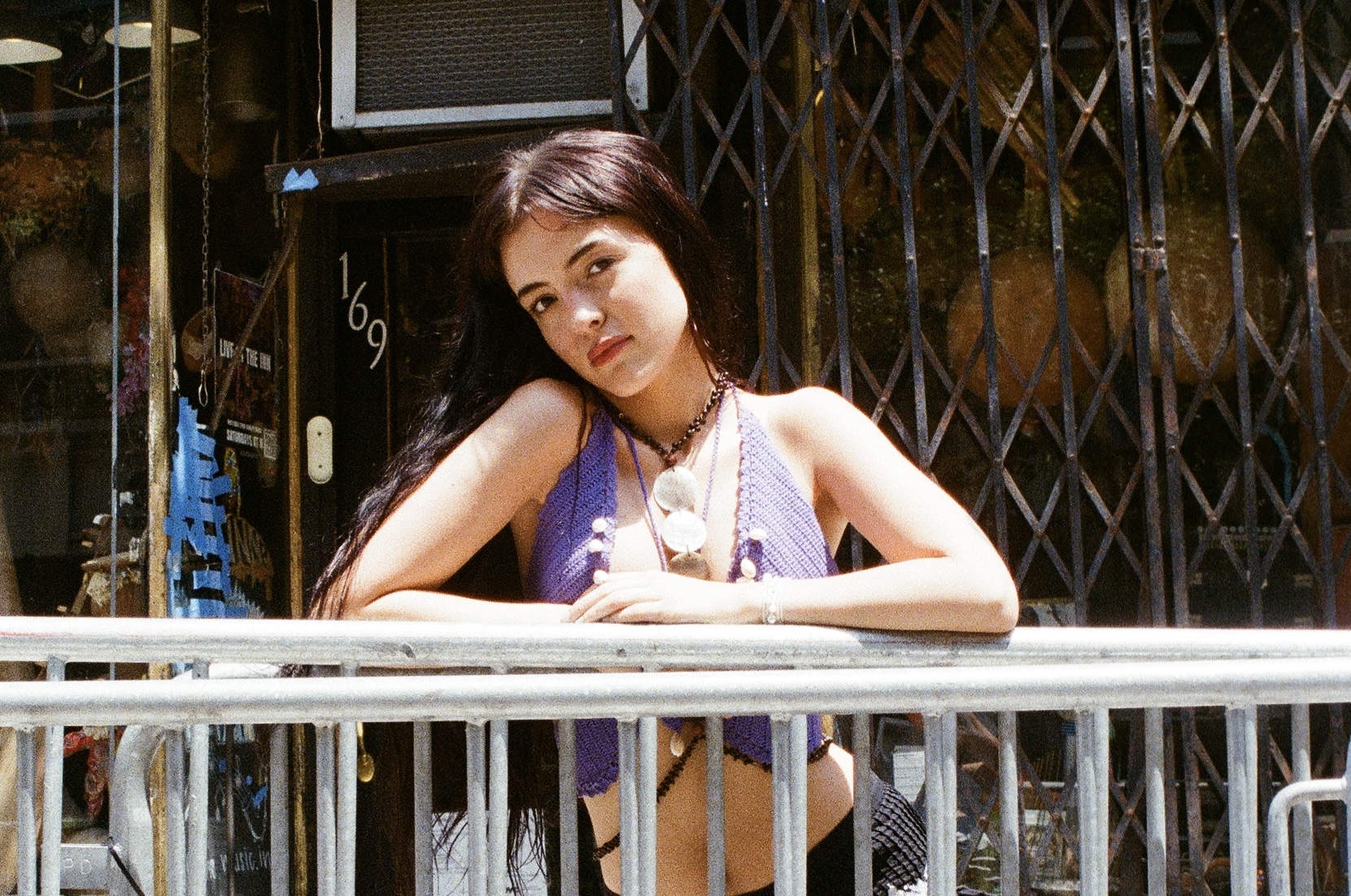
SALOMÉ SOL'S WORLD IS FULL OF EASTER EGGS
The musician and multidisciplinary artist on how surrealism, spirit, and sound shape her creative world.
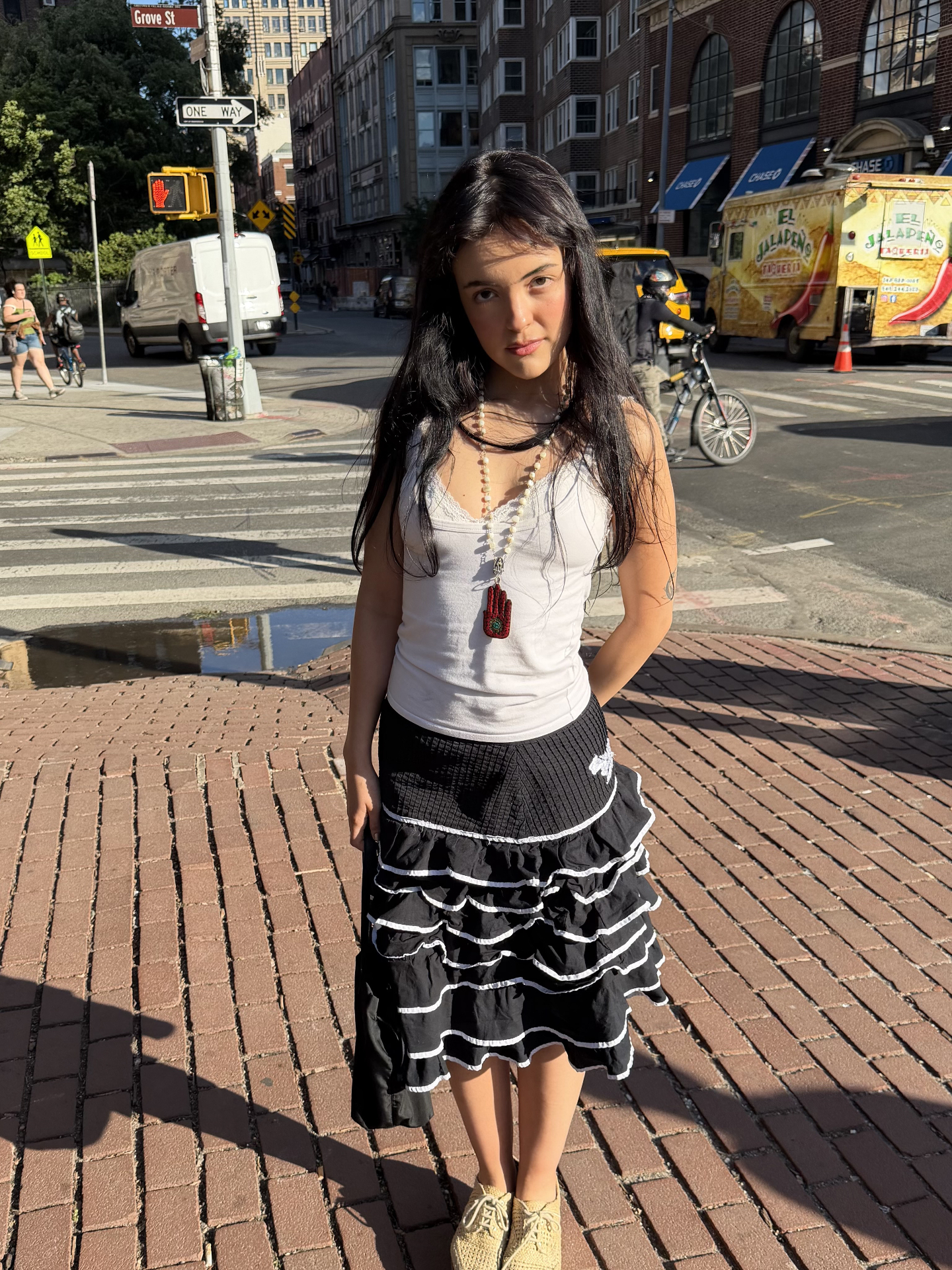
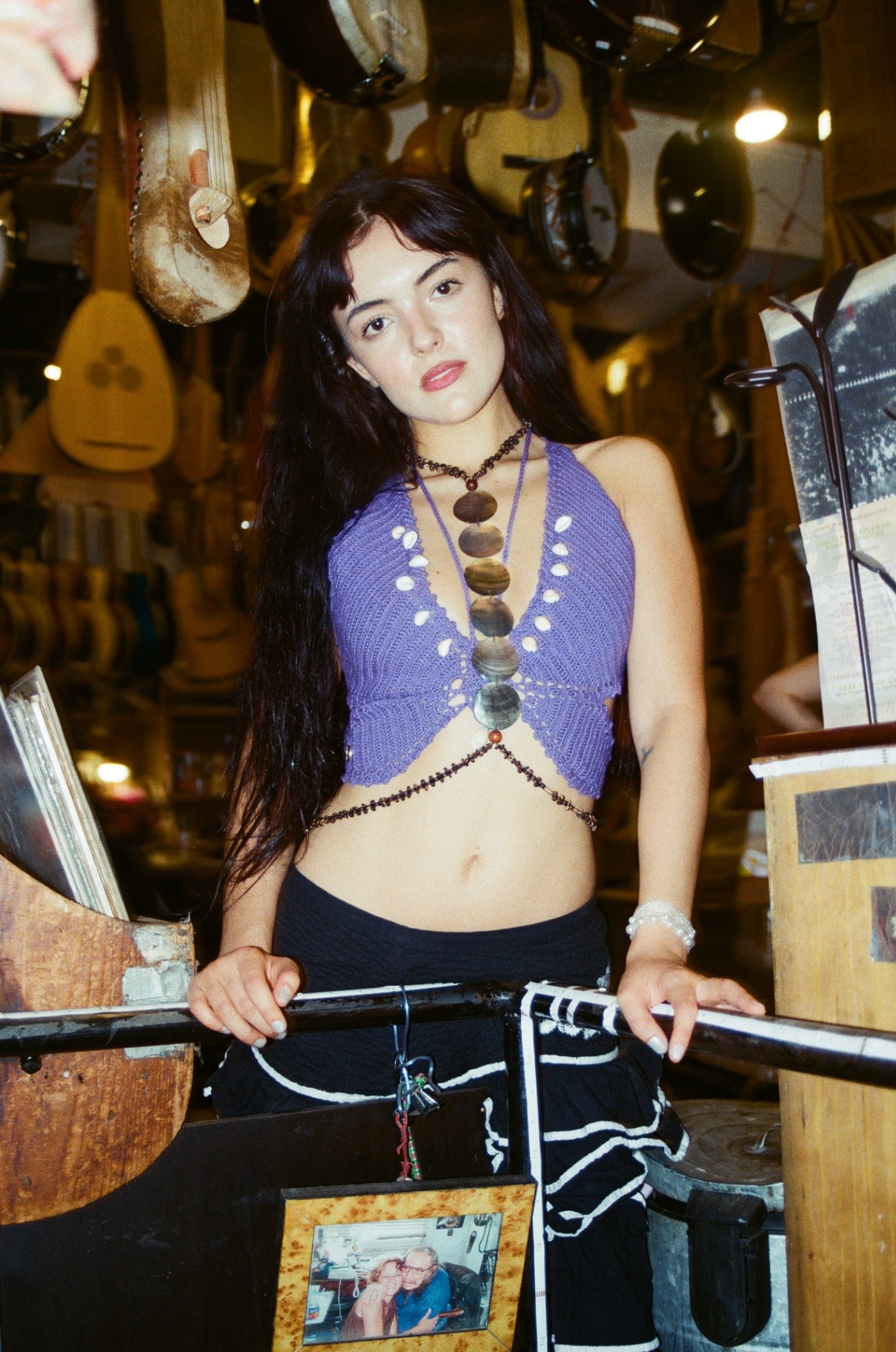
Salomé Sol creates in the space between mediums. Ask her what she does, and the honest answer is all of it, held together by the same instinct: following the thread. Born in Colombia and raised in Miami, Sol moved to New York City at 18 to pursue a life in art. She's a musician, a writer, and a multidisciplinary artist guided by surrealism, spirit, and sound.
ROXY:You're from Miami, one of the few places in this country where speaking Spanish isn't treated as something to apologize for. I'm curious how growing up in that kind of environment shaped your artistry, given that you sing in Spanish. Was that a conscious choice, or something you never really had to think twice about?
SALOMÉ:It was actually a conscious choice because I never really thought about it while I was living in Miami. The two languages are so intertwined there. In my head, they're never English and Spanish. They're one language to me, and that's how we understand each other.
Once I moved out of Miami, I started feeling the otherness of being Latina in a way I never had there. So I thought, Okay, I can explore Spanish now. Even coming into the music scene here and wanting to experiment, Spanish felt like something that was mine, a part of my culture I could develop in my own way. I think it started from a sense of insecurity around music, where I wanted to be left alone to understand what expression meant to me before I was fully part of the scene. Being othered for singing in Spanish felt protective, like a sense of privacy. So it was kind of the opposite of what you'd expect: not having it around made me lean into it even more.
Being othered for singing in Spanish felt protective, like a sense of privacy.
That's tied to something I work with a lot: nostalgia. I actually haven't been back to Miami in almost a year because it's always available to me, and I've been writing about it a lot. I'm inspired by the surrealism of Florida: the tropics, the clash of politics, opinions, and cultures. I've stayed away this whole year to understand what still lives inside me when I'm not there.
Sometimes you want to be in the moment, but you can only really see things for what they were once you look back. I think about that in New York, too. There's so much beauty here, but I'm not reminiscing about it while I'm here; I'll digest it later. When you're creating, a lot of that surfaces. All the memories, all the things you pinned in the moment, sometimes not even consciously. They just stand out in your memory and end up in your art.
The choice of Spanish specifically: I think poetry just feels more raw in that language, especially as a writer working across essays, songs, and poems. With music, Spanish feels like the heart talking. It lets me say less without intellectualizing. When I speak English, I feel like I switch on a very intellectual part of my brain. With Spanish, it feels like: This is what I feel. This is who I am. I think that's the sentiment I want to bring into my music.
Growing up Latina in the U.S., Spanish is something you reserve for the people you love. It becomes precious, held close to the heart. I think that's beautiful.
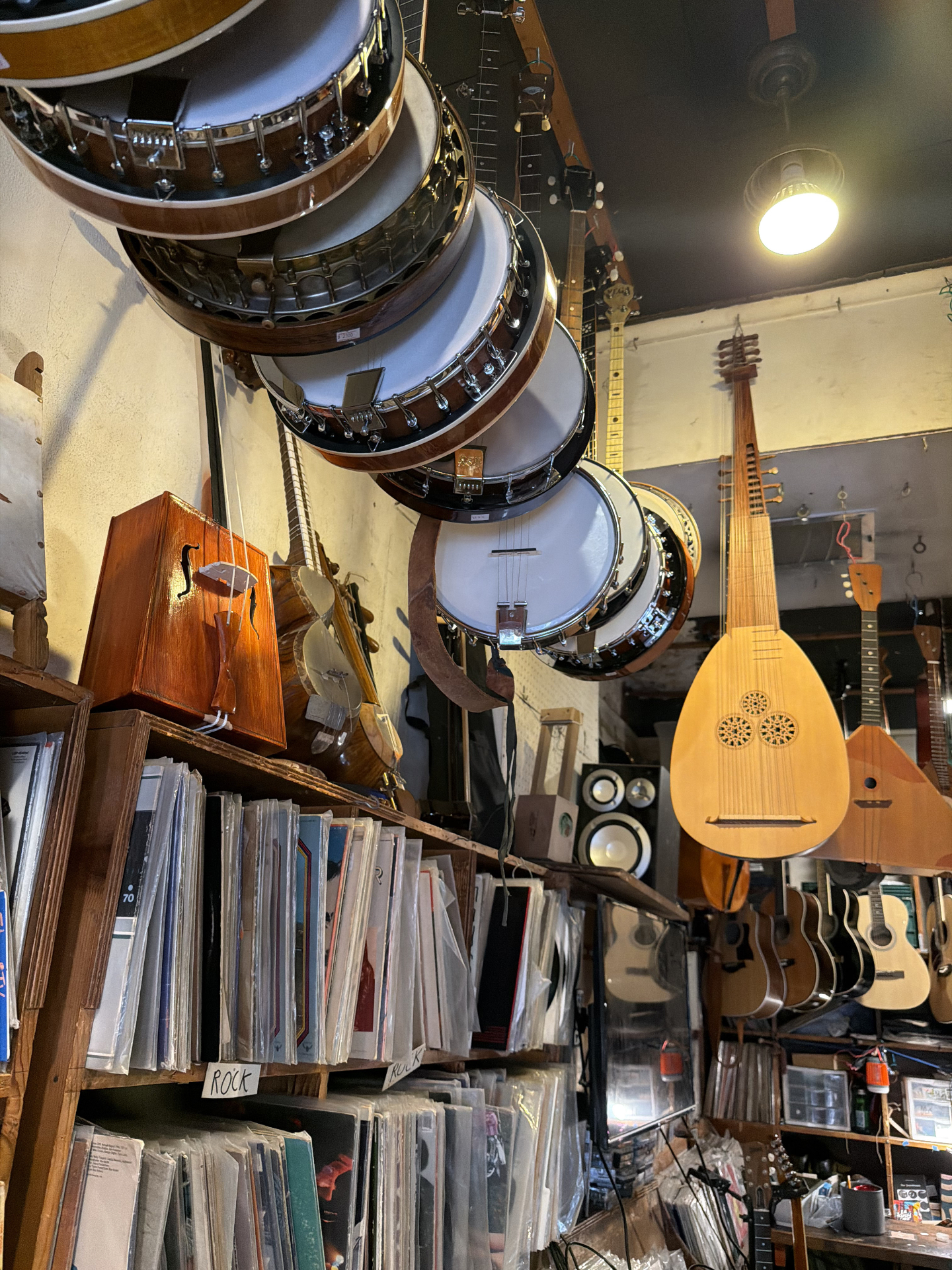
ROXY:“Sirena,” your debut single, takes its name from the siren, the mythical figure who uses her voice to lure people in. What drew you to that figure as the title of your debut? It surfaces in the cover art, too, in its own way.
SALOMÉ:It's called “Sirena” because it's a techno-pop, house track inspired by Miami's rave culture, which is so tied to the beach, femininity, and sexiness. When I was making it with my friend Connor, I kept coming back to that Miami sexiness: the beach, going out, clubbing. You're either at the beach for a rave or there afterward to tan, pass out, and wake up. That whole feeling—the beach, being a woman, listening to music, feeling sexy—is what “Sirena” is to me.
A lot of the lyrics are elusive, a little esoteric, because the song is inspired by the myth of a woman drawing you into the sea. Some of it comes from Cuban tradition: Yemayá, the sea goddess, and the idea of a seductress—a magical, mystical figure who comes alive at night, tied to the coast. Which is what all the Latina baddies are doing at the coast, really: coming out, seducing, partying. I wanted to capture all of it.
ROXY:What's interesting is how you took something literally mythical and found a through-line a lot of people might miss. Mermaids are often cast as some of mythology's most seductive figures, and Miami women carry that same energy in the flesh. I love that you found that connection.
SALOMÉ:Every time someone looks into my work and tries to pull the strings apart, I'm so grateful. There's always a double, triple, or even quadruple meaning. That song is meant for you to dance to without overthinking it. But if you do want to think about it, we can talk about it. There's lore in all of my work, so I'm happy you took the time to think about that one—and to dance to it.
ROXY:How deeply do you Easter egg your art?
SALOMÉ:A lot. And it's funny, because sometimes I don't even realize it. I'll go back years later to something I made and think, Oh my God, what the…? Sometimes the Easter eggs are just for me because nobody really knows that part of my life, but they're all in there. We could go line by line, and I could tell you the story behind everything. I haven't actually told anyone most of them. I think it's just self-amusement. A girl's gotta get through it somehow. I'm Easter egging for me.
ROXY:Art is so personal, and you mentioned earlier that different layers of yourself emerge depending on the medium you're working in. But underneath all of it, you're still feeding the same artist, no matter the discipline.
SALOMÉ:Yes, you kind of have to Easter egg yourself to keep your brain thinking. That's so true, and it's important. It also makes me happy to be able to talk about it because, in settings like this, someone can ask, “What did you mean by that?” and I get to reveal it. Once the art is out in the world, the Easter eggs don't explain themselves. So having moments where I can sit down and talk about them is really valuable.
ROXY:Is there an Easter egg you'd want to give the world, something close to your heart?
SALOMÉ:Oh, God. Well, there's a lot of mythology in my work, a lot of nods to tarot because I've studied it since I was a little girl. There are also a lot of nods to alchemy—alchemical processes and stories—and a lot of spirituality woven in quietly. And then there are lines that simply carry stories. I'll throw them in without saying anything. I'm a collector of all things, even photographs.
There's a song, “Otra Vez,” that's built like a collage, and there's a reference to the Sinbad Motel in it, a motel where I used to have sleepovers with a lover because it was fun to be somewhere trashy. I wrote a poem on a completely different topic and mentioned the Sinbad in it, and nobody knew what it meant. Everyone assumed it was some elusive turn of phrase, but it was that motel, which also has its own story in my upcoming essay collection.
ROXY:It's all tied together, isn't it? You're world-building.
SALOMÉ:Yeah, the more you're part of it, the more you see that. I think that's the thing about being multidisciplinary: it allows for that kind of layering. But it can get tricky, too. It's easy to spread yourself too thin. You're following all these different threads, but you always have to hold one vision in mind. It has to go somewhere, so even when it looks loose to everyone else, you know where you're headed. A work in progress isn't going to make sense while you're pulling from different avenues at once. It only makes sense once it all comes together and you see the picture, the reference. But in the middle of it—studying flamenco, writing essays, showing up to this event or that one—people might not understand what you're actually after. It's all in pursuit of the same thing, though.
ROXY:I know exactly what you mean, as someone who's drawn to working across different things myself.
SALOMÉ:I hate the word “dabbling,” though. I think it cheapens the art. But when you're creative, you have to experiment.
ROXY:Both of your practices seem to live by that: you're always moving between music and writing.
SALOMÉ:Writing is the core of everything. It's the root. Even if I'm shooting photos, I'm writing the concept first before I bring in a photographer. Everything else, at this stage of my life—where I'm trying to become the best artist I can be—requires a lot of collaboration. I have a producer I work with. If I'm shooting photos, someone helps me. But writing is the one thing I sit with alone. That's my space, shutting off the world. Everything else comes out of that.
It's why I love writing: it's the blood of the work. You write a film before you shoot it, write the script before you direct it, write the lyrics before there's a song. It's the foundation every other medium grows from.
So when people ask, “Why is she doing all that?” to me, it's never felt like different disciplines. It's the same practice, just expressed in different forms. Among artists, there's an understanding of that. But on a larger scale, I've run into a lot of confusion too. That's the price you pay, and it's part of it. People are going to be confused by your work while you're in the middle of the process. It is what it is. We spend so much time trying to explain ourselves, or feeling like we need to, when really the work will show it. It's confusing in the moment, but that's just the name of the game.
ROXY:In your Substack essay “Bearing Witness: Reflections on Conflict, Silence, Encampments, and the Soul,” you wrote about writing around trigger words instead of directly through them, as a way of reaching the roots where people can stay open enough to receive and discuss something. What does that actually look like in practice?
SALOMÉ:I'd actually say it's the opposite: it's more like writing into it. That was a political essay about Gaza and the genocide in Palestine. It was published before condemning it became a widely held public position. The government still doesn't want to admit it, but the news media was finally starting to catch up.
What I was seeing—and what I've always seen growing up in Florida, such a right-wing place with so many minorities—is how susceptible we are to propaganda. Propaganda creates buzzwords, and buzzwords create fear by making something feel similar to a time when you felt endangered or ostracized. When you're writing, the words you choose carry such strong connotations that certain ones can flip a switch and shut down someone's defenses, when otherwise there'd be a lot of common ground. I understand the buzzwords that keep you from turning your attention to this. I want you to look here.
So with writing, with making art, I think it's really important to take a stand and know what you believe. Because if you're going to represent people through your work—represent ideas, represent what someone's going through by communicating your emotions—you're being a representative. That's political, whether or not the work is explicitly political.
As much as I think artists should be vocal and take a stand, I also think it's our job to remember that, since we're using our humanity to create, we have to connect with everybody regardless. It's not an easy choice, but it's an important one if you want to understand humanity, because that's what you're tapping into as an artist: the most human parts of yourself.
Writing about politics with that in mind means sitting with the discomfort of it: I have to love someone who thinks I don't deserve rights. I have to love someone who holds atrocious views, even while I'm angry at them, even when I don't want to be near them. But if I stop seeing their humanity, then I'm no different.
So writing into that means trying to find a dialogue. I want you to see Palestine right now. I want you to see the immigration crisis we're living through. How can I connect with you beyond my own leftism?
There's a history here. There are people who've been hurt who are now hurting other people. We can all empathize with those cycles because war and genocide have been happening since the dawn of time. We have the capacity to understand that without TV or social media, in just a few words.
If I hear a word like “Trumpy,” my instinct is to recoil. But maybe that person comes from a working-class background and is worried about where their next meal is coming from. I can relate to that as an immigrant from a working-class background myself. Once we set the fighting words aside, we can actually connect. That's always what I'm trying to do with my writing: not necessarily prove a point, but show where I'm coming from and make it accessible to people on different paths, so there's room for everyone.
ROXY:I think there's a real privilege in perspective, in having the education and access it takes to hold both sides at once.
SALOMÉ:I fully agree with that. Even with jargon, you should be able to explain your ideas cohesively. I don't need to be doing the most. I can tell you about mythology in a techno-pop song. It's nuanced, but I think buzzwords are devices of polarization.
Back to writing, and the word itself: it has so much power that you want to handle it with sensitivity, especially when you're writing about something like that. The essay came out at a very sensitive time. It's only been two years, but I got so much hate for it.
ROXY:I'm curious what that experience did to your relationship with writing. Did it make you hesitate before publishing something so personal and politically charged, or did it make you feel even more certain those were conversations worth having?
SALOMÉ:It was interesting because I was writing that essay during the encampments, and I live in Harlem, so I was seeing them firsthand, going out and supporting them. It was the first time my eyes were really opened to how blatantly the media can lie. I was seeing things being reported that didn't match what I was witnessing in person, and the disconnect was stark. You always hear that the media lies, but seeing it firsthand, that blatantly, marked me.
It made me appreciate art even more because art captures the essence of humanity. When the media is lying, when governments are turning their backs on their people, what we have to do is hold onto the truth and speak it from the moment: say what people are thinking and feeling when no one else will.
ROXY:What does being a multi-hyphenate creative mean to you today? Do you think artists have always worked across disciplines, or is that something unique to this generation?
SALOMÉ:I think the greatest artists have always drawn from more than one fountain of inspiration, though I can't say for certain whether that's always been common practice, so I'll speak for myself. With the financial realities of today, and so much information at our fingertips, a lot of artists have to take matters into their own hands and learn different skill sets to make the art they want—and actually make a living from it: making the music, then marketing it, then shooting the videos. Being a multi-hyphenate today often means pursuing something that's entirely your own.
Beyond what that means and where it comes from, for me it's been about following a string of curiosities and trusting there's a bigger picture. I talk about this with my little brother a lot. He's into politics, tech, and business, but he's receptive to the art I make, and I've always been receptive to his ideas. I think it's a mistake to keep disciplines separate because, no matter what we're doing, we're all searching for a truth we can't fully access. That's why we keep trying, keep writing. Once you catch a glimpse of a certain vision, you want to capture it. You start down one path and want to see more, and you begin noticing how everything connects.
For me, it's this: I have a vision in my head, something grand, layered, visually compelling, connective. And when you try to build that, you realize, Wait, this music is actually very mathematical. Studying audio, I start understanding physics, understanding science. Fashion tells a story, too. It's how we tell stories about ourselves before you even open my journal.
You start seeing that everything is connected, and you want to dive into all of it to build a richer picture.
I remind myself of that, too. I want to learn everything, like we all do, like the Sylvia Plath fig-tree image that haunts every woman. I have to ask myself, Okay, where am I spreading myself too thin, and where is it actually serving the vision? That's how I know what to cut, because there are always different fruits, different plants you could water. But you have to know which ones will grow together to build the thing instead of distracting you from it.
ROXY:Beautifully said. There is so much distraction to contend with.
SALOMÉ:There is. I think that's the biggest challenge for creatives right now: staying focused on your vision while still wanting to be inspired, staying curious about new things, but being intentional about what you choose. It's hard. I think it's practice: practice knowing yourself, practice understanding what actually matters.
And you have to fuck up. There's no right way. You have to do a lot of wrong things. Ambitious people can get obsessed with getting it right and just keep pushing, but failing is the most important part. We have to go through the stretches where our screen time spikes because you have to know what that feels like to understand your own limits. Otherwise, there's no ceiling, and you don't know how far you can fall. You have to know your own trenches.
It's about knowing yourself. You start changing because of the work you're doing, and the work you do changes because of who you're becoming. I feel very aligned with this liminality, this stage of my life where I'm embracing leaving everything I know to go somewhere else.
Related Stories
 Field Notes
Returning to the Source with asri
Artist, Violinist, Composer & Producer|JUL 27, 2026
 A/B Testing
SHOOTING FOR THE EDIT WITH SARAH KENDRIC
INTERVIEW|JUL 18, 2026
 Field Notes
The Art of Gathering with Tída Norasingh
Musician & Founder of JIJI's Jazz Club|JUL 23, 2026
 Field Notes
The Body as Material with Eloise Harcourt
Sculptor & Mixed-Media Artist|JUL 22, 2026