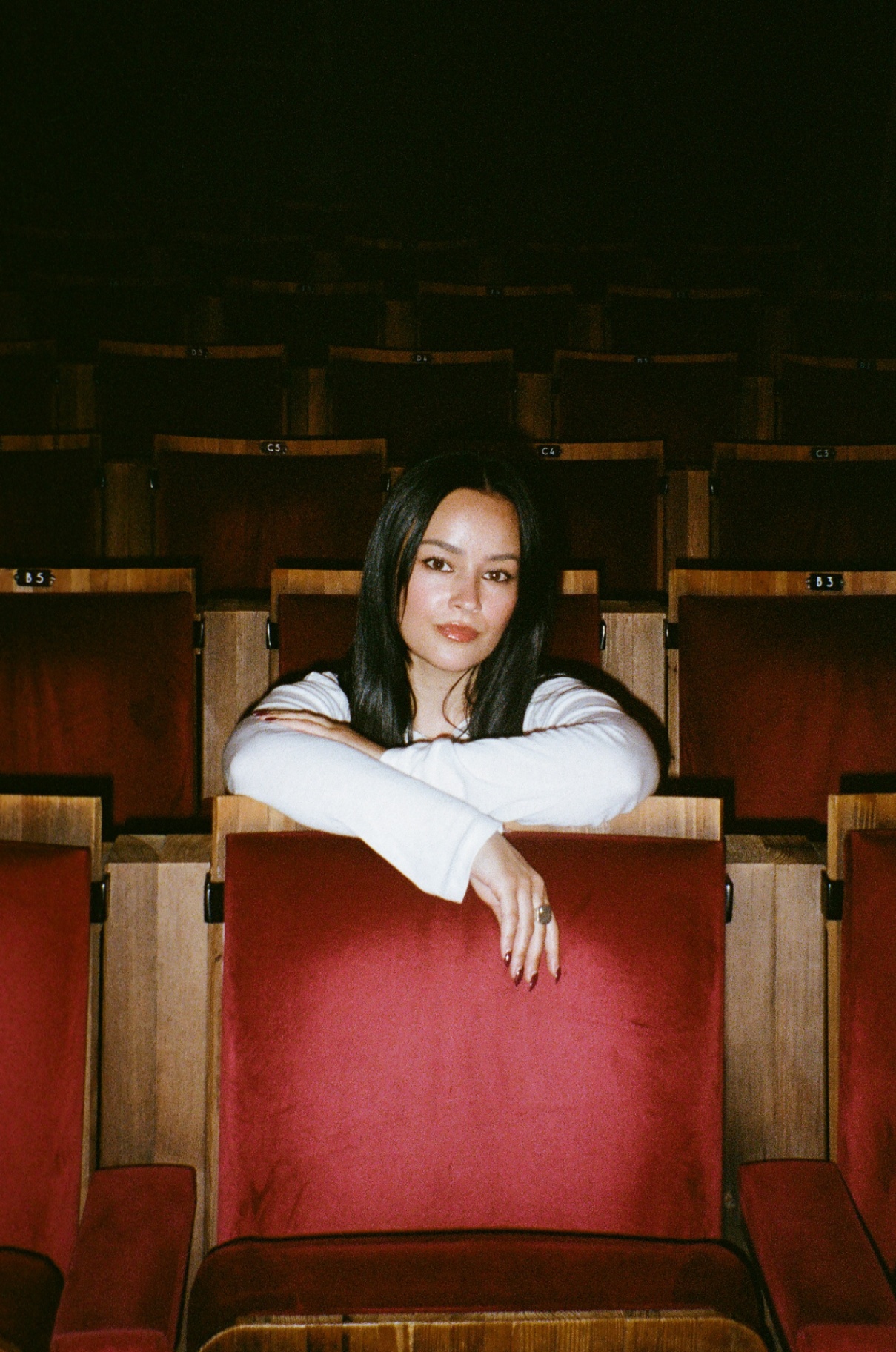
SHOOTING FOR THE EDIT WITH SARAH KENDRIC
The director and editor on what it means to build a creative life across disciplines.
Sarah Kendric started as an editor before she ever called herself a director, and that order still shapes everything she makes. She spent four years at Milk Makeup, walking in as an intern and walking out as Art Director of Video. She's now a few months into working full-time as a freelance director and editor, splitting her attention between commercial work for brands and a personal practice built around dance, pop culture, and image-making—a practice that began with test shoots during the pandemic.
ROXY:What's the first thing you ever made that felt like yours? It could be something from your time at Milk, or something earlier.
SARAH:It's an interesting question because I've been making things my whole life. As a kid, making things earned me a lot of praise and support, especially from my parents, so I always felt like if I pursued my creativity broadly, it would lead somewhere good for me. I studied graphic design at Parsons. I was proud of my thesis project, but I approached it more like a research project than a design project. It was really during the pandemic that I started feeling more like the author of my own work because I was collaborating with friends more. I remember doing a lot of test shoots with my friend Kyle, who's a photographer. We made them from a place of play, freedom, and exploration. It felt more like image-making than the design work I'd studied in school. Through that process, I brought in symbols I felt genuinely drawn to—a motorcycle, red roses, things like that—and it helped me develop my own voice as a creative. That's when I really started to come into my own in terms of what I wanted to make and what I wanted it to look like.
ROXY:A lot of people came out of the pandemic with two very different experiences: some felt creatively shell-shocked by the isolation, while others thrived in the stillness. Which one were you?
SARAH:That's interesting. I didn't lean hard one way or the other. It helped that I was still in school. I always had an assignment, and that let me think about solving creative problems in a fun way. That momentum was already there before the pandemic hit, so it just continued, and I found new ways to keep creating from home. I was studying web design at the time, so I had a lot of fun being home, scanning old diaries and turning them into a website. It became a lot about connecting with past versions of myself, something I don't really do in my work anymore, but at the time it felt fun, maybe even soothing. It also gave me a lot of room to experiment. It was during Covid that I first bought a Super 8 camera and learned how to use it.
ROXY:You direct and edit your own work. How does that shape what you make? Does the editor in you ever fight the director?
SARAH:I was an editor before I was a director, and I definitely have that editor's sensibility where I shoot for the edit. I feel like some directors shoot a lot on set and find it later in the edit, but by the time I'm on set, I already know what I want the end product to be, and I shoot for that. So there's less fighting between the two roles than you'd think. If anything, I think the editor teaches the director more than the other way around: to advocate more for the shot. When I'm on set, I have a tendency not to want to ask too much of the talent—not to ask for another take, not to try something different that I think will work—because I want to stay on track. Then, when I'm in the edit later, the editor in me is basically saying, “Next time, push for it,” because I miss it in the cut otherwise.
The editor teaches the director more than the other way around: to advocate more for the shot.
ROXY:You're a director, editor, and creative director. What does being a multi-hyphenate creative mean to you today? Do you think working across disciplines is a generational shift, fueled by unprecedented access to tools and resources, or have creatives always worked this way, and we're only noticing it now?
SARAH:For me personally, I think of different disciplines as different tools. Especially when you're working in video, there are so many departments involved. The more backgrounds you understand, even if you can't execute each one perfectly yourself, the better you can communicate with people and ask for what you want more clearly. It helps you grow because, when you speak the same language as your collaborators, you get to what you want to see faster. Going to school for design, for example, was useful. I'll probably never design anything again for its own sake, but it's still a valuable tool. If I'm doing something for myself, I know I can typeset it and make it look clean. Or I can work with someone else and show them exactly what I want by speaking their language. For me personally, studying different disciplines doesn't come from a place of scarcity. It's not really about thinking, “If I can do more things, I'll be more hireable.” I don't relate to that very much. It's more about growth and understanding different sides of the work I want to do.
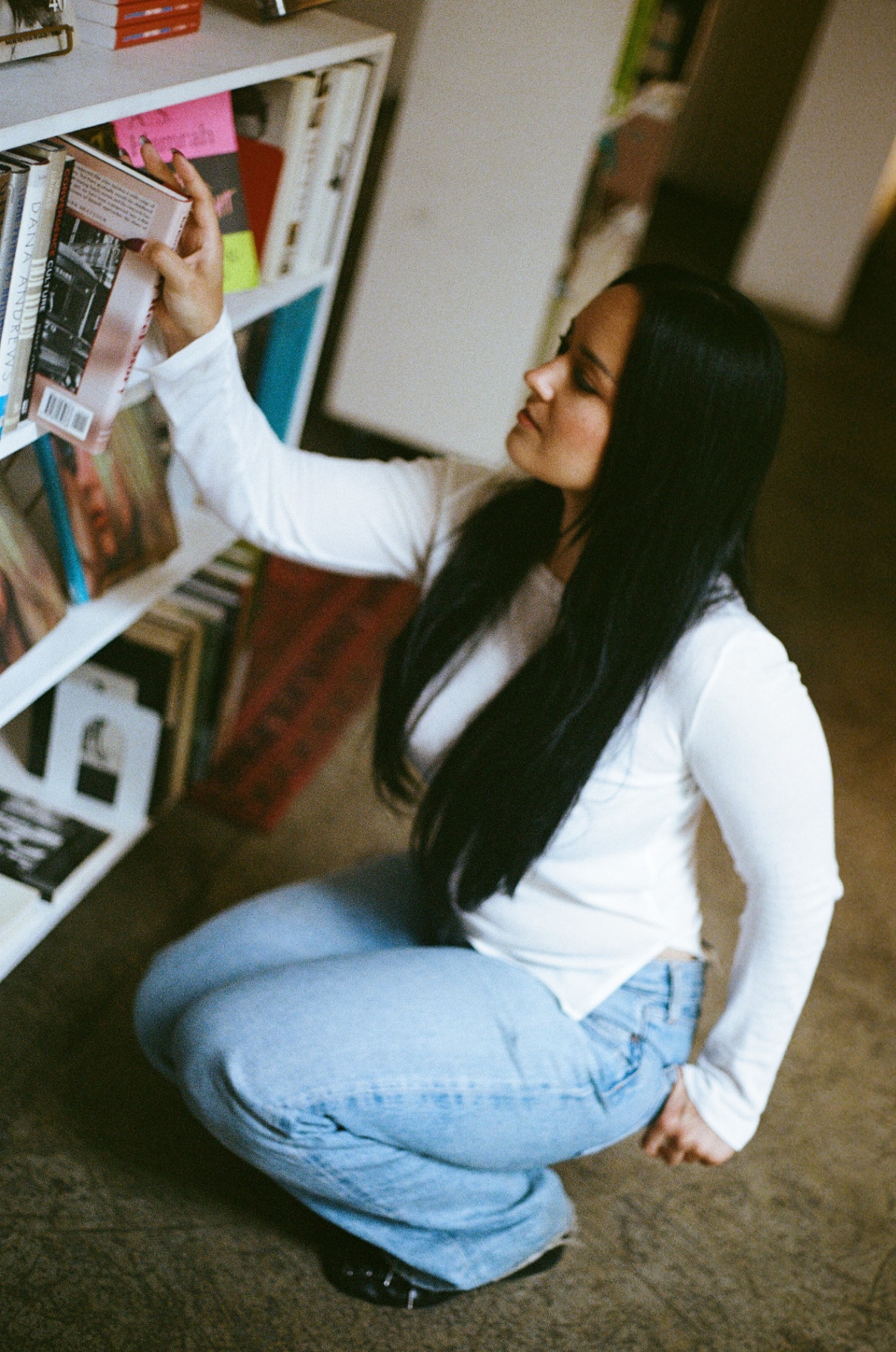
ROXY:What does the space between concept and execution feel like for you? That in-between place.
SARAH:It's definitely the freest part of the process, for the reason we touched on earlier. By the time I'm on set, I usually have a really clear idea of what I want the end product to be. But in between concept and execution, there's so much room to iterate with your collaborators. I think that's the space with the most possibility.
ROXY:You did a Glamcult feature for Bliss Reel, and I know the project came out of a real sense of dread about the political landscape. Instead of letting that dread sit heavy, you leaned into pleasure as a kind of ballast against it, which I think is such a sharp instinct. How do you actually build something beautiful out of a starting point like that?
SARAH:Especially in difficult, uncomfortable times, I think it's kind of the artist's job to respond. There are endless ways to do that. It could mean holding a mirror up to what's happening, or trying to render its reality—or the feeling of it—as accurately as possible. I'm drawn to things that create culture and cultural moments, things that have levity, because that's where I've found the most joy and connection. I'm also a big believer in escapism. I completely worship pop music and pop visuals. They create conversation without always being heavy or literal. That's something I'm genuinely interested in: building a world and an identity for an artist that people can participate in without guilt, without having to bring the full weight of reality with them.
ROXY:I'm glad you brought that up, because pop music might be the most creatively underrated form we have. People treat it as something lesser, when in reality there's an enormous amount of craft behind it. Pop music has shaped culture more than almost anything else.
SARAH:It's always been an easy target, and I understand why, because it feels commercial.
ROXY:You mentioned being surprised that your peers talked about community instead of sex when you asked them about pleasure while making Bliss Reel. What did that realization change for you?
SARAH:At first, I thought maybe they just didn't want to talk about sex with me, since we'd just met on set. I figured they were being shy. But the more I sat with it, and the more I got to know my subjects, the more I came to see that it was genuinely sincere on their part. It's led me to apply the things they said brought them joy and pleasure to my own life, and I've found that same feeling myself. The dancer I interviewed, Sofia Quezaire, talked about deriving pleasure from communal energy and movement. After I spoke with her and finished the project, I started going to her classes more, and to dance classes in general, and that's become a real source of pleasure for me too. So I came to understand it completely, and I was grateful for the range of interpretations because it made the project feel a little more whole and a little less narrow than if it had just been me speaking about it. Even though video artists can technically make something entirely alone, with just a camera or a phone, the type of work I want to make involves production: more people, more collaborators. A lot of the joy in the end product, for me, comes from the collaboration itself. It makes me happy knowing how many people I'll get to work with—not just other artists, but producers, production designers, everyone.
ROXY:You spent four years at Milk Makeup and went from intern to art director. What did that arc teach you about yourself as a creative?
SARAH:So much. When I started at Milk, I already knew how to edit, but I had zero inclination that I wanted to be a director. That wasn't on my mind at all when I started there during my last year of college. I learned an enormous number of hard skills there, really everything about production, because we had such great producers: how to build a shot list, how to take care of talent on set, how to color grade—real technical skills. We shot pretty frequently, always running a still set and a video set at the same time, and I was drawn to the video side. I owe a lot of my creative development to the team I worked with there, especially my boss who championed me in tangible ways. Every time I expressed interest in something, she made it happen for me.
ROXY:How do you continue developing your own style? Is there something you do actively, or does it happen more organically?
SARAH:I'm always learning through doing. Every set I've been on so far has taught me something about my own style. I also subscribe to the Artist's Way idea of filling the well. You build a creative reservoir you can pull references from, connect the material you're working with to something that's existed before, and create in the context your work lives in. The catch is that you have to keep filling it. If you're only working from the same five references, it gets dry fast. Physical media is a big thing for me too. Library180 has been a great resource. I'd encourage anyone who makes images to look for inspiration beyond the internet and to actually go out and do things.
ROXY:Is there anything coming up you can share or want to shout out?
SARAH:I've been loving working with perfume brands lately. There's some stuff coming out later this month that I'm excited about. I'm also planning a test shoot I'm looking forward to. Hopefully, a lot more will be in the works by the time this actually comes out.
ROXY:What does the phrase “almost becoming” mean to you right now, in your own life?
SARAH:It feels very literal for me right now because I'm just a few months into directing and editing freelance full-time. When I tell someone what I do now, it still feels a little fake to say out loud, like I'm lying a little. There's just so much ahead of me at this point, so much of my personal life and creative life I'd still like to grow into. I relate to it very specifically right now.
There's just so much ahead of me at this point, so much of my personal life and creative life I'd still like to grow into.
ROXY:Last question. What's the project you haven't made yet that scares you the most?
SARAH:Honestly, I don't think there's anything that intimidates me.
Related Stories
 Field Notes
Returning to the Source with asri
Artist, Violinist, Composer & Producer|JUL 27, 2026
 Field Notes
The Art of Gathering with Tída Norasingh
Musician & Founder of JIJI's Jazz Club|JUL 23, 2026
 A/B Testing
SALOMÉ SOL'S WORLD IS FULL OF EASTER EGGS
INTERVIEW|JUL 17, 2026
 Field Notes
The Body as Material with Eloise Harcourt
Sculptor & Mixed-Media Artist|JUL 22, 2026