
SAMI HARLOW WANTS YOU TO KNOW SHE REGRETS NOTHING
The actor and musician on creating without certainty and trusting where the work leads.
Interview goes live
One of the most patient artists of her generation, Ruby Winters keeps rebuilding the same room until she can walk into it herself. Her practice destabilizes the hierarchies of finished and unfinished, private and public — and dismantles the prevailing belief that a body of work has to arrive fully formed to count.
"I've never really finished a piece," Ruby says, laughing, as she pours coffee into two mismatched mugs. "I just stop at the part that feels honest, and then I start something else." Her studio in Greenpoint is the size of a one-car garage. A window faces a brick wall. A coffee maker sputters in the corner like a small engine that has agreed, reluctantly, to keep working. She was already drawing when I arrived — she is almost always already drawing when anyone arrives.
For the last five years, Ruby has kept a practice most of her peers would call impractical: she makes things, then she puts them away. Sketchbooks stack against the wall in a leaning tower she calls, without irony, "the archive." Songs live on a hard drive she rarely opens. Index cards with single sentences written on them are taped to every flat surface in the room. The oldest one, above her desk, is faded to a soft grey. It reads: none of this has to be for anyone yet.
Lorem ipsum dolor sit amet, consectetur adipiscing elit. Integer nec odio. Praesent libero. Sed cursus ante dapibus diam. Sed nisi. Nulla quis sem at nibh elementum imperdiet. Duis sagittis ipsum. Praesent mauris. Fusce nec tellus sed augue semper porta. Mauris massa. Vestibulum lacinia arcu eget nulla. Class aptent taciti sociosqu ad litora torquent per conubia nostra, per inceptos himenaeos.
The work you make when no one's looking is the work that ends up being you.
It would be easy to read this as a strategy — the calculated privacy of an artist waiting for the right moment. But sitting with Ruby for even a few minutes makes it clear that the privacy is the practice. She isn't hoarding the work; she's letting it get old enough to be honest. "I think there's this pressure now to show everything the second it exists," she says. "And I understand it. I've done it. But when I look at what I actually love — the songs I keep coming back to, the artists I trust — none of that stuff was rushed. It was allowed to become itself."
She points to the archive. "A lot of what's in there will never leave this room, and I've made peace with that. The thing I'm learning is that a private practice isn't a failed public one. It's its own whole thing." She talks about her early years the way most artists talk about their late work — with the calm of someone who has already survived the version of themselves that needed to be seen.
Curabitur sodales ligula in libero. Sed dignissim lacinia nunc. Curabitur tortor. Pellentesque nibh. Aenean quam. In scelerisque sem at dolor. Maecenas mattis. Sed convallis tristique sem. Proin ut ligula vel nunc egestas porttitor. Morbi lectus risus, iaculis vel, suscipit quis, luctus non, massa. Fusce ac turpis quis ligula lacinia aliquet. Mauris ipsum. Nulla metus metus, ullamcorper vel, tincidunt sed, euismod in, nibh.
ROXY:What does becoming mean to you?
RUBY:It means being willing to look stupid for a while. I think the people I admire most are the ones who let themselves be in the middle of something before they know what it is. That's the only honest place. Everything else is performance, or it's memory. Becoming is the tense where you're actually doing the work.
ROXY:You've been making things privately for a long time. What changed?
RUBY:Nothing changed, honestly. That's the part people find hard to hear. I didn't have a breakthrough. I just kept showing up in this room, and eventually the room got quieter. I stopped needing the work to prove anything to me. Once that pressure was gone, I could actually look at what I'd made.
ROXY:Do you ever worry you waited too long?
RUBY:Every day. And then I remember that "too long" is a story I'm telling myself. The work doesn't have a deadline. I do. Those are different things, and I keep getting them mixed up.
ROXY:What are you almost?
RUBY:Almost brave enough to finish the thing. Almost patient enough to let it take the time it takes. Almost not caring if anyone sees it. Those three things, in a loop, forever.
ROXY:Is there a version of you that already finished it?
RUBY:Sure. She lives about eighteen months in the future. She's very calm. She's annoying, actually. I don't want to be her. I want to be the person who is still figuring it out, because that's the part that feels like a life.
ROXY:What's the last thing you made that surprised you?
RUBY:A song I wrote in about twenty minutes on a Tuesday. I've been circling the same idea for two years, writing these long, careful versions of it, and then one afternoon I just — said it. It's four lines. It might be the best thing I've ever made. Or it might be nothing. I genuinely can't tell yet, and I'm trying to let that be okay.
A private practice isn't a failed public one. It's its own whole thing.
ROXY:You've talked about being wary of the internet as a distribution model. Why?
RUBY:It's not that I'm wary of it — it's that I'm wary of what it does to the work before the work even exists. If you're making something with the feedback loop already running in your head, you're not making the thing. You're making a response to a room you haven't walked into yet. I want to walk into the room first.
ROXY:Who do you make things for?
RUBY:Whoever I was two years ago. She needed the thing I'm making now, and I couldn't give it to her because I hadn't made it yet. So I'm just — passing it back. That's what all of it is, really. A very slow relay.
ROXY:What's the room you're trying to walk into?
RUBY:One where I don't have to explain myself. Where the work has done that already, and I can just be a person in the room. I'm not there yet. But I'm building it, one honest thing at a time.
Quisque volutpat condimentum velit. Class aptent taciti sociosqu ad litora torquent per conubia nostra, per inceptos himenaeos. Nam nec ante. Sed lacinia, urna non tincidunt mattis, tortor neque adipiscing diam, a cursus ipsum ante quis turpis. Nulla facilisi. Ut fringilla. Suspendisse potenti. Nunc feugiat mi a tellus consequat imperdiet. Vestibulum sapien. Proin quam. Etiam ultrices. Suspendisse in justo eu magna luctus suscipit.
It is late afternoon by the time we stop talking. Ruby stands, stretches, and picks up a pencil, which is how I know it's time to leave. She walks me to the door with the distracted warmth of someone whose mind has already returned to the desk. "Come back when there's something to show," she says. Then, before she closes the door: "Or don't. It's kind of the same to me now."
Walking back to the train, I think about the note above her desk. None of this has to be for anyone yet. It reads, at first, like a permission. Sitting on the G train an hour later, watching the tunnel lights strobe past, it starts to read more like a discipline. Maybe those are the same thing. Maybe that's the whole point of a practice like Ruby's — to make the permission and the discipline into one thing, and then to live inside it long enough that the work becomes inseparable from the person who made it. Almost. Almost. Almost.
Related Stories
Across the publication
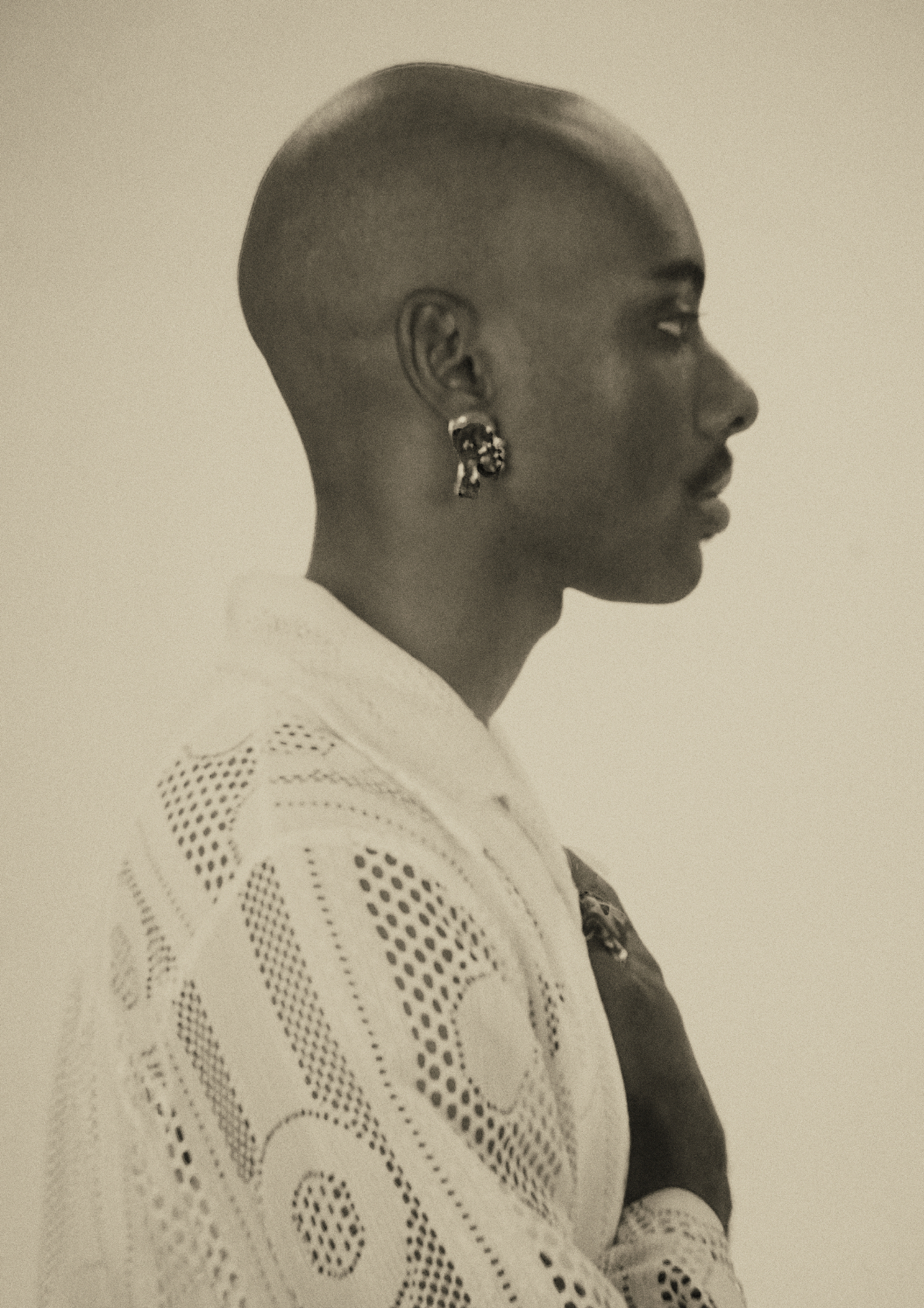 Field Notes
Returning to the Source with asri
Artist, Violinist, Composer & Producer|JUL 27, 2026
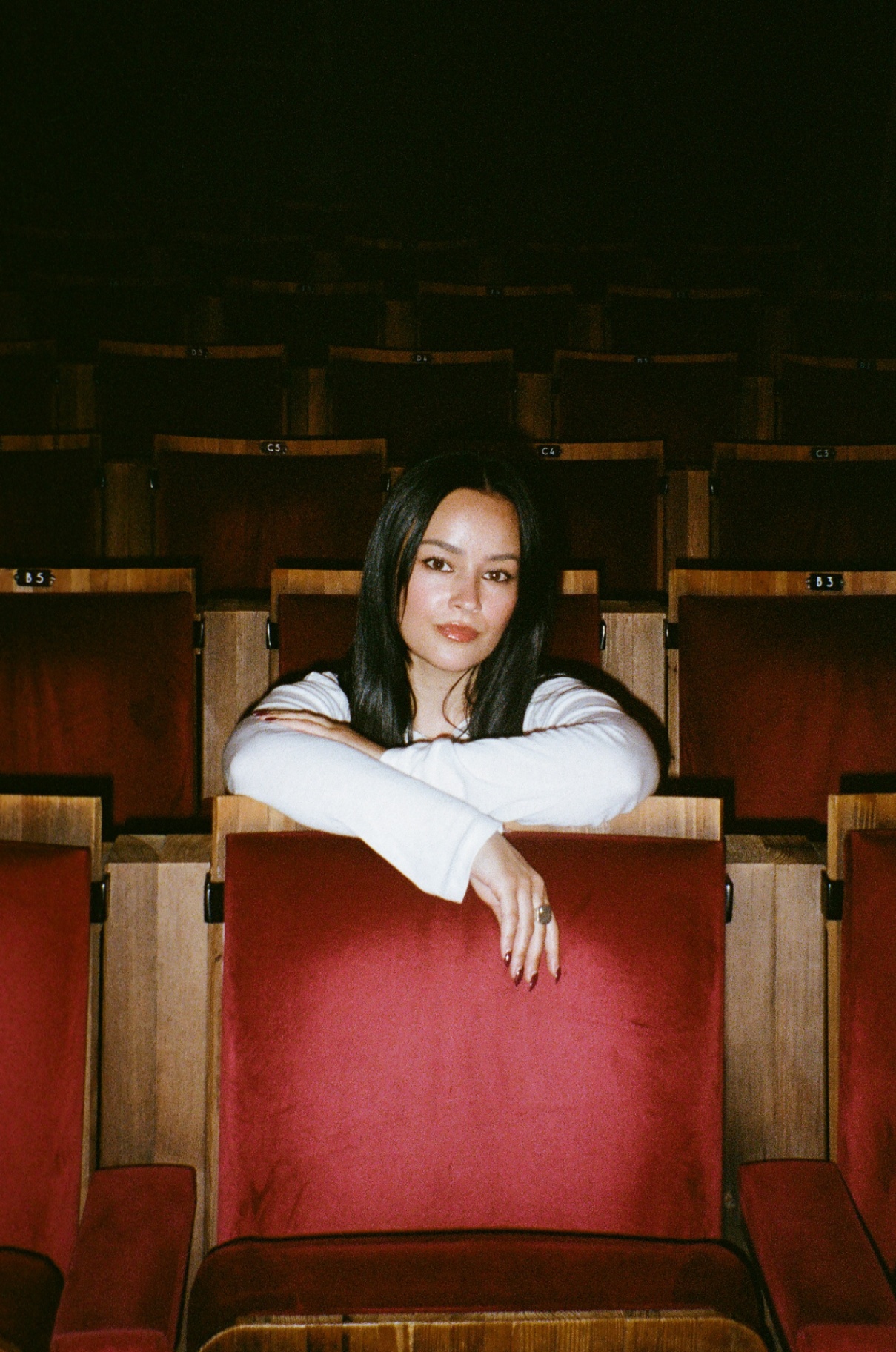 A/B Testing
SHOOTING FOR THE EDIT WITH SARAH KENDRIC
INTERVIEW|JUL 18, 2026
 Field Notes
The Art of Gathering with Tída Norasingh
Musician & Founder of JIJI's Jazz Club|JUL 23, 2026
 A/B Testing
SALOMÉ SOL'S WORLD IS FULL OF EASTER EGGS
INTERVIEW|JUL 17, 2026