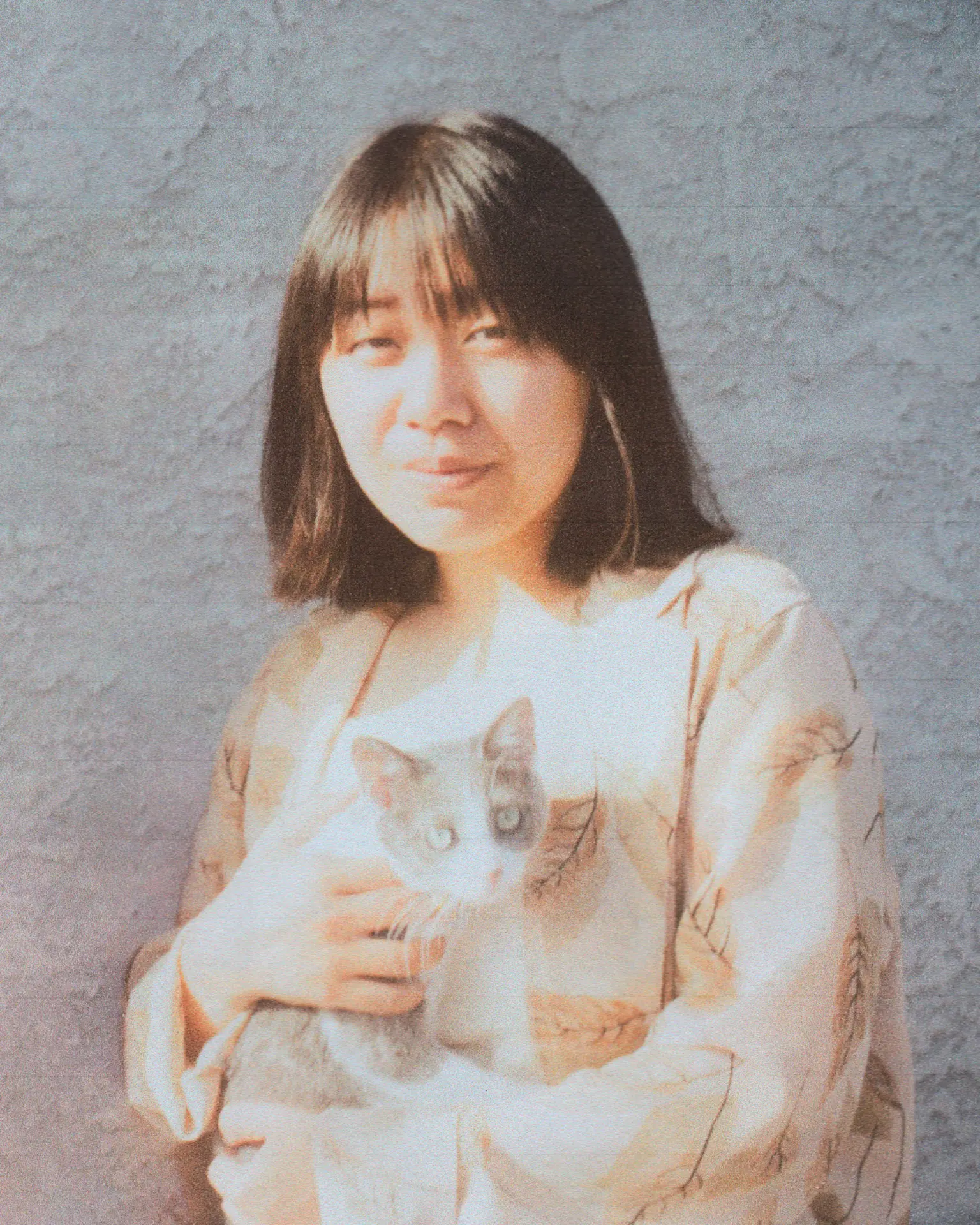
Li Anne Liew (she/her) is a filmmaker born and raised in Kuala Lumpur, Malaysia.
She is inspired by unknown cities, and the emotional quality of settling within familiar and unfamiliar places. She hopes to forever make films that make the mundane feel grand and intimate.
Your work has such a distinct, dreamlike quality. Was it something that evolved naturally over time, or did it take shape more intentionally?
A lot of what I make is me trying to recall a memory, and most times, recalling a memory feels like recalling a dream: the mismatched versions of reality and piecing missing holes together, like trying to memorise a face or the way the light felt. When I make my work, I really want to settle into the atmosphere. I think a lot about how a place leaves us hanging and how those moments feel so fleeting. I want to make the mundane feel grand and intimate, and the other way around: that beautiful places can render us small. I started out by documenting everywhere I went. Eventually, I felt my attention drifting elsewhere. I wanted to represent my feeling of that place instead of just presenting what I saw, so I'm lending a lot of subjectivity to these places. I'm always writing about the same things, and I think a lot of my work just asks the question, “How do I represent that emotion?” The way I view the world is always changing, so those feelings are always visually translating into something different each time. In the last year, I've been doing more experimentation whenever I find pockets of time. I'm creeping closer and closer to marrying all the things I love together. Something I love making now is kind of a montage of everything I've collected: footage from past travels, all my animation experiments, and staging actors. I like the idea of creating a version of mini moving dioramas with all these elements. I'd say that has emerged naturally over time. Every time I try to approach something with realism, it's often swerved the other way. It took me a really long time to realise that that just wasn't me, even though, for a while, I so badly wanted it to be. As time goes on, I'm trying to do less of what feels like forcing myself to create something that looks like what I think my art should be. Everything I make is because of a feeling. It's a sum of looking at life around me, watching an environment change, and dwelling with different emotions. I'm growing into my work; it's growing with me.
Has your creative process changed as you've taken on bigger projects?
I think I've always worked the same way, but I can confidently say that I approach bigger projects with more nervousness. With bigger projects, there's obviously the added layer of having more hands involved, but my thought process stays pretty similar whether I'm working on a personal project or something on a larger scale. I love working with the same people I've been growing with (and also working with new collaborators, of course!). As time and practice go on, I've become a lot more refined in knowing what I want. As more projects come, I really want to start translating a lot of what I'm doing into physical sets.
I'd love to talk about your work on Olivia Rodrigo's lyric videos. How did that collaboration first come about, and what was your creative process for bringing those visuals to life?
Jaime, her creative director, reached out on Instagram! Both songs immersed me in a very long and regretful slumber spent in the bedroom. In forming my visual approach, I really just wanted to dive deep into her world, and the design for her website laid out the blueprints for a lot of it. In ‘maggots for brains’, I wanted bold lines, lots of spunk, colour, and grime. I immediately saw a room filled with disproportionately sized objects spiraling out of control, kind of like a very stylized diorama of us looking in. Lots of rot, bugs, stains, aimlessness, and repetitive motion. A title like that is so visceral, and the song is so fun to listen to despite the self-deprecation in her lyrics. The beat inspired the impatient motion and restlessness of the moving objects. The grimy images she describes were conveyed through an additional layer of drawings over the scene, like smudging charcoal pastels over backgrounds and drawing moldy-coloured accents and turbulent pencil outlines over objects. ‘less’ was so sad and emotionally vulnerable, so I wanted the images and motion to feel delicate. The song reminded me of an out-of-body experience attempting to understand a situation. I thought of ghosts as a form of memory and disconnection, and chose to represent that image through suspended clothing. It made me think a lot about the ways we preserve beautiful yet tragic moments in our heads, and how we try to hang on to them. The visual approach felt tender and bittersweet, with a clear focus on the moments she describes. The first image that popped into my head was a snow globe depicting an idealised memory, but I wanted to mash that up with a CD playing as a way to replay the moment.
If you could introduce our readers to one artist, who would it be?
Yoki Ng, my dear friend and an amazing musician. She creates incredibly haunting and tender worlds through her music.
Keep up with Li Anne Liew