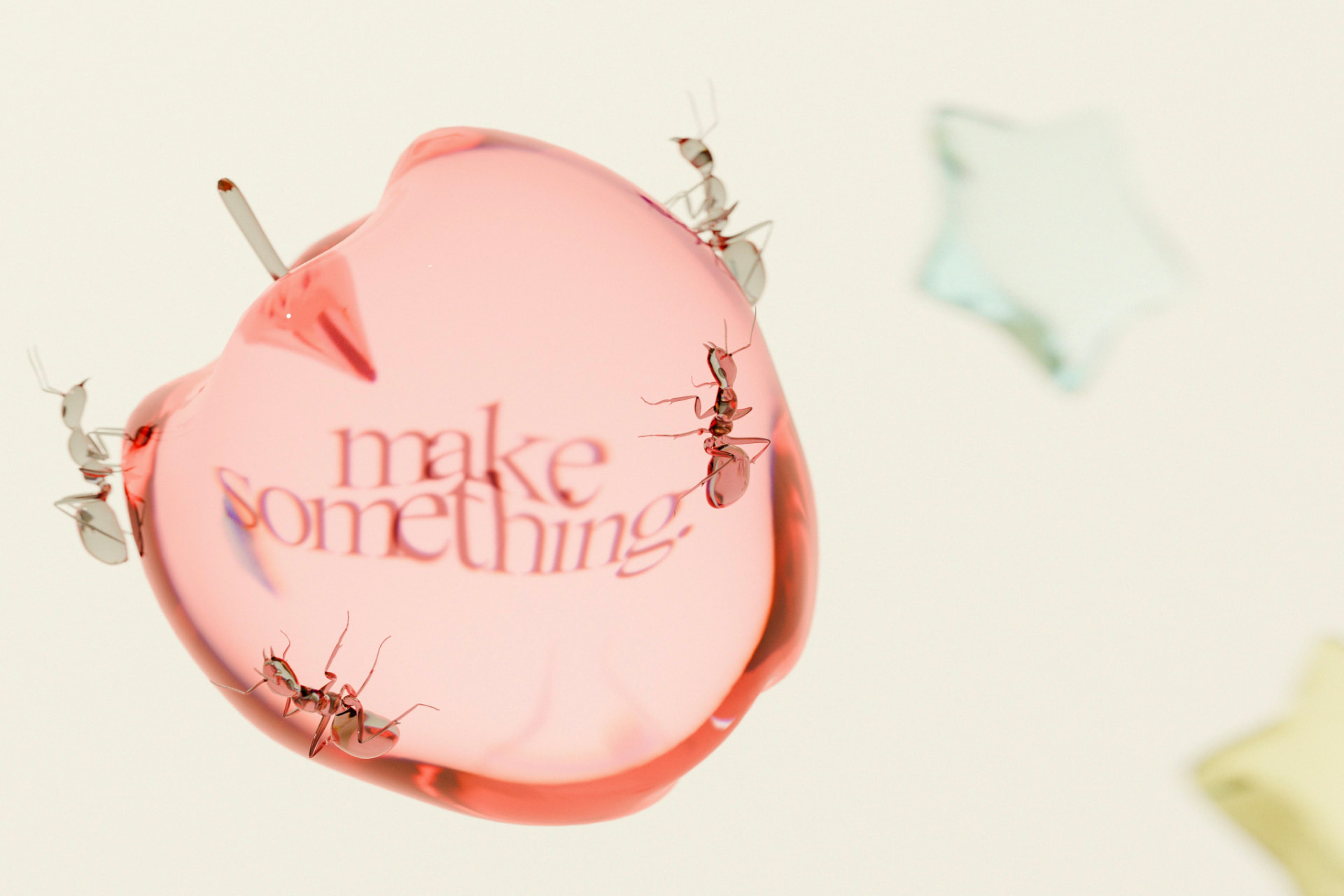
Olivia Pedigo (she/her) is a Miami-based 3D artist and animator who digitizes the strangeness of everyday life. She uses the spaces and objects around us to look at how memory attaches itself to what we own and the comforts we depend on. Her practice spans digital art and interactive installation.
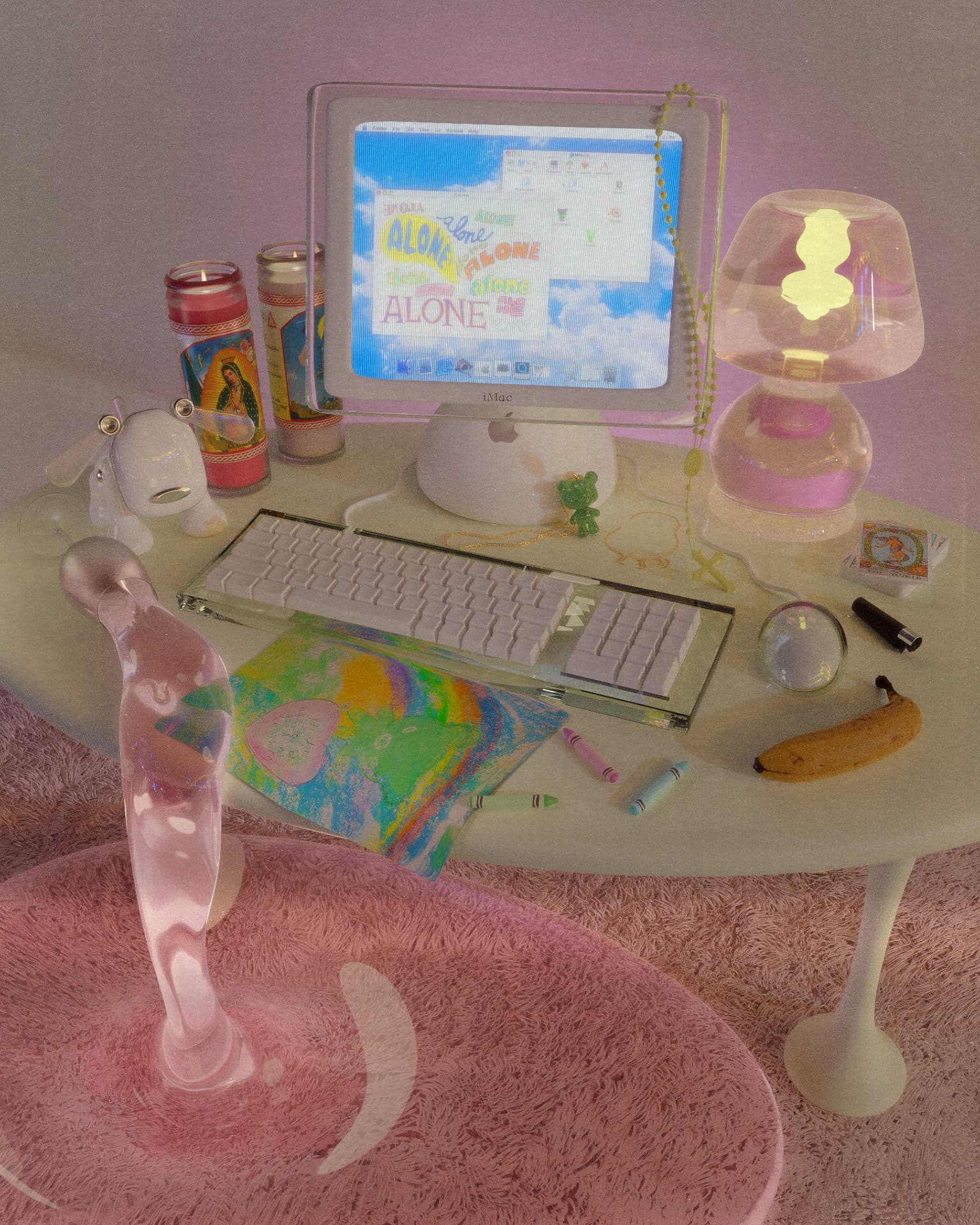
Your work is beautifully detailed, but the scenes you create are so expansive and personal. How do you approach building these environments, from your initial idea to the finished work?
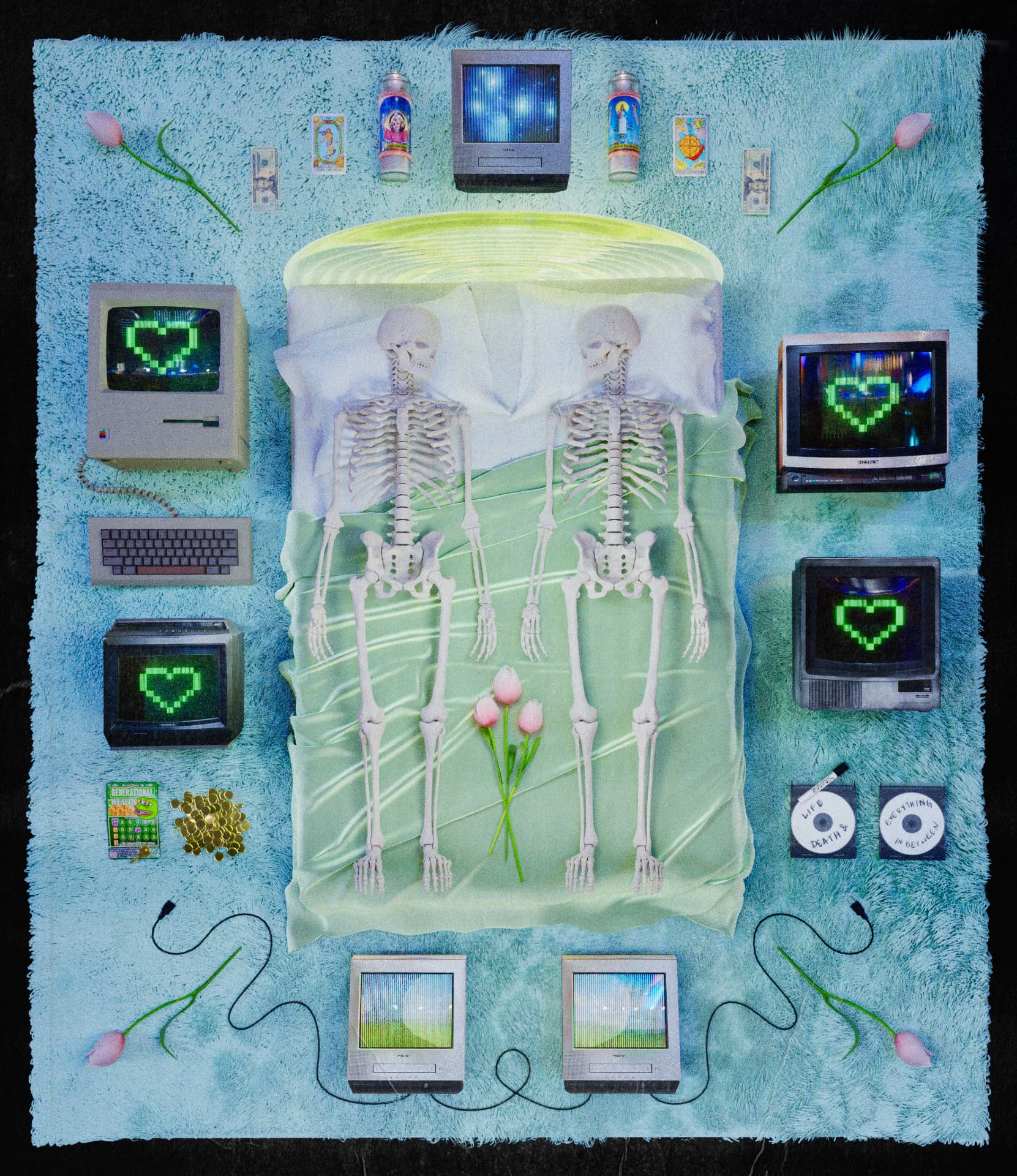
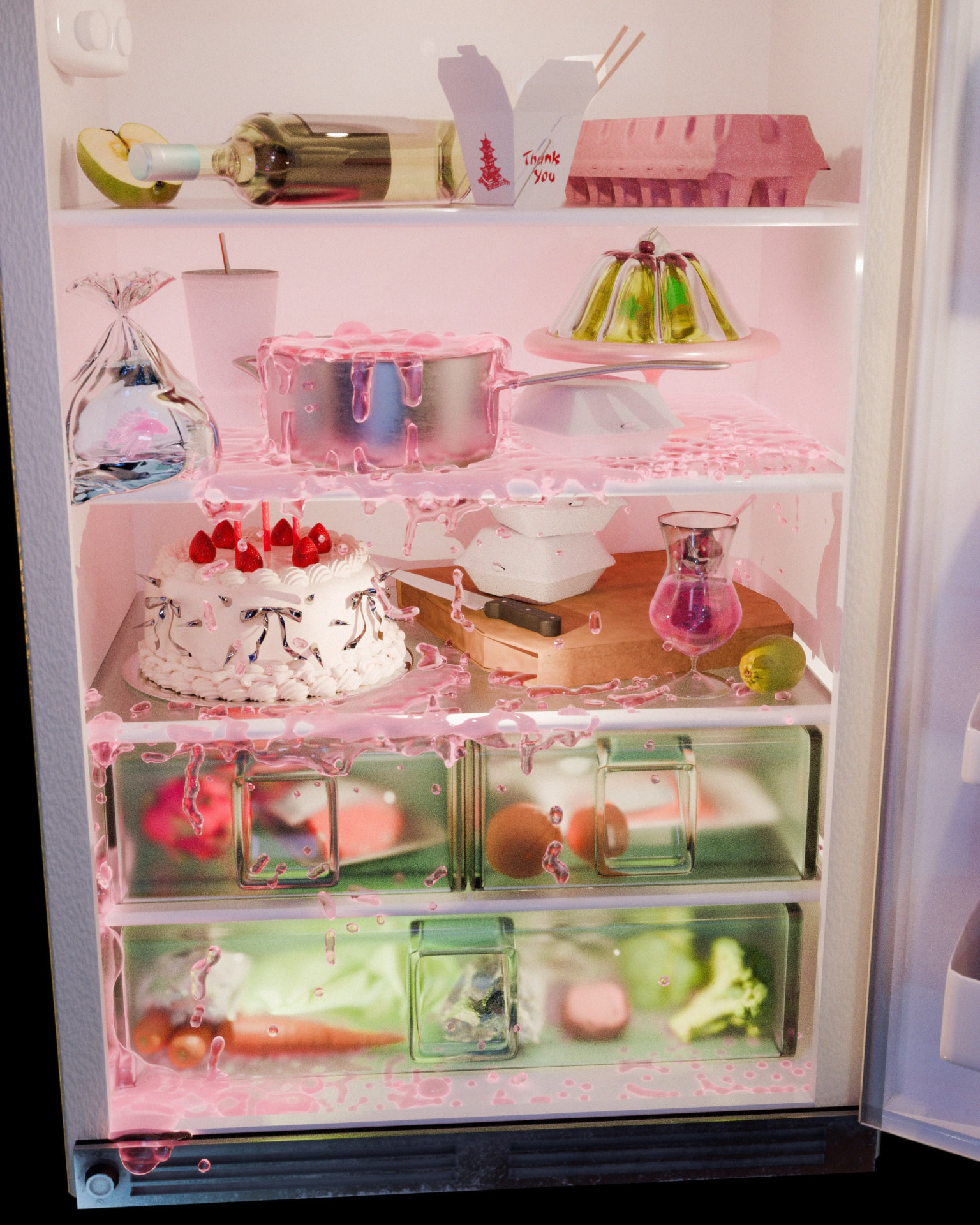
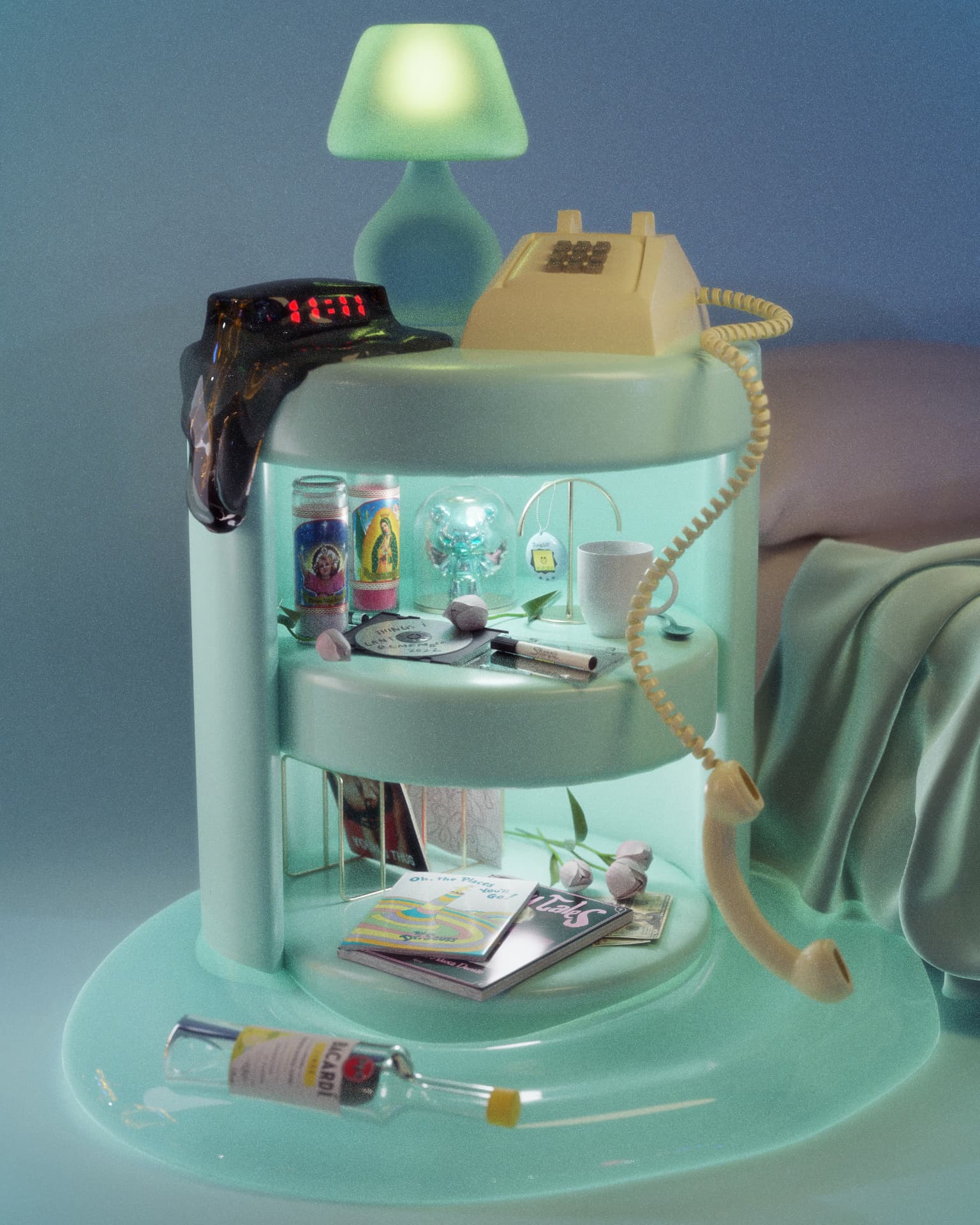
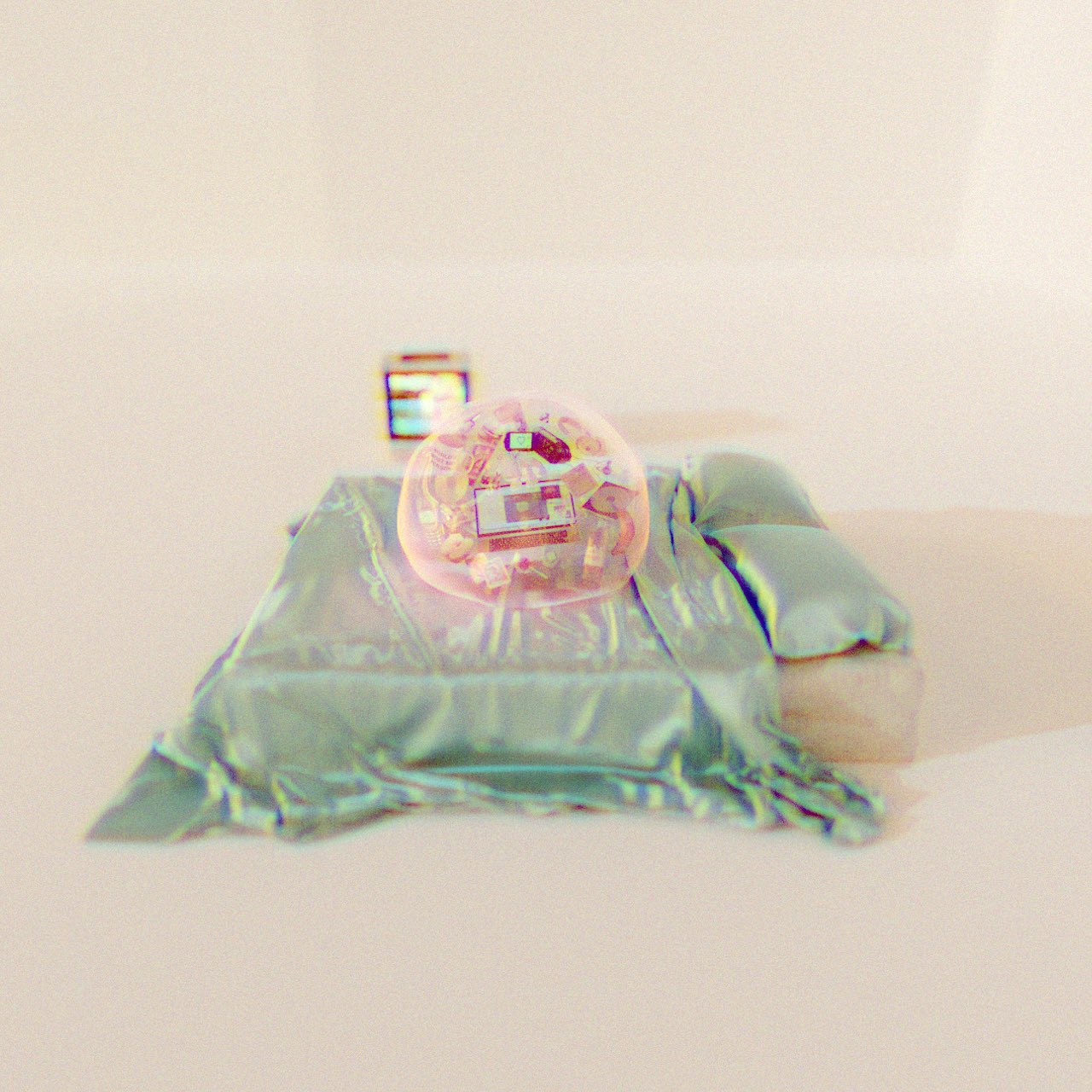
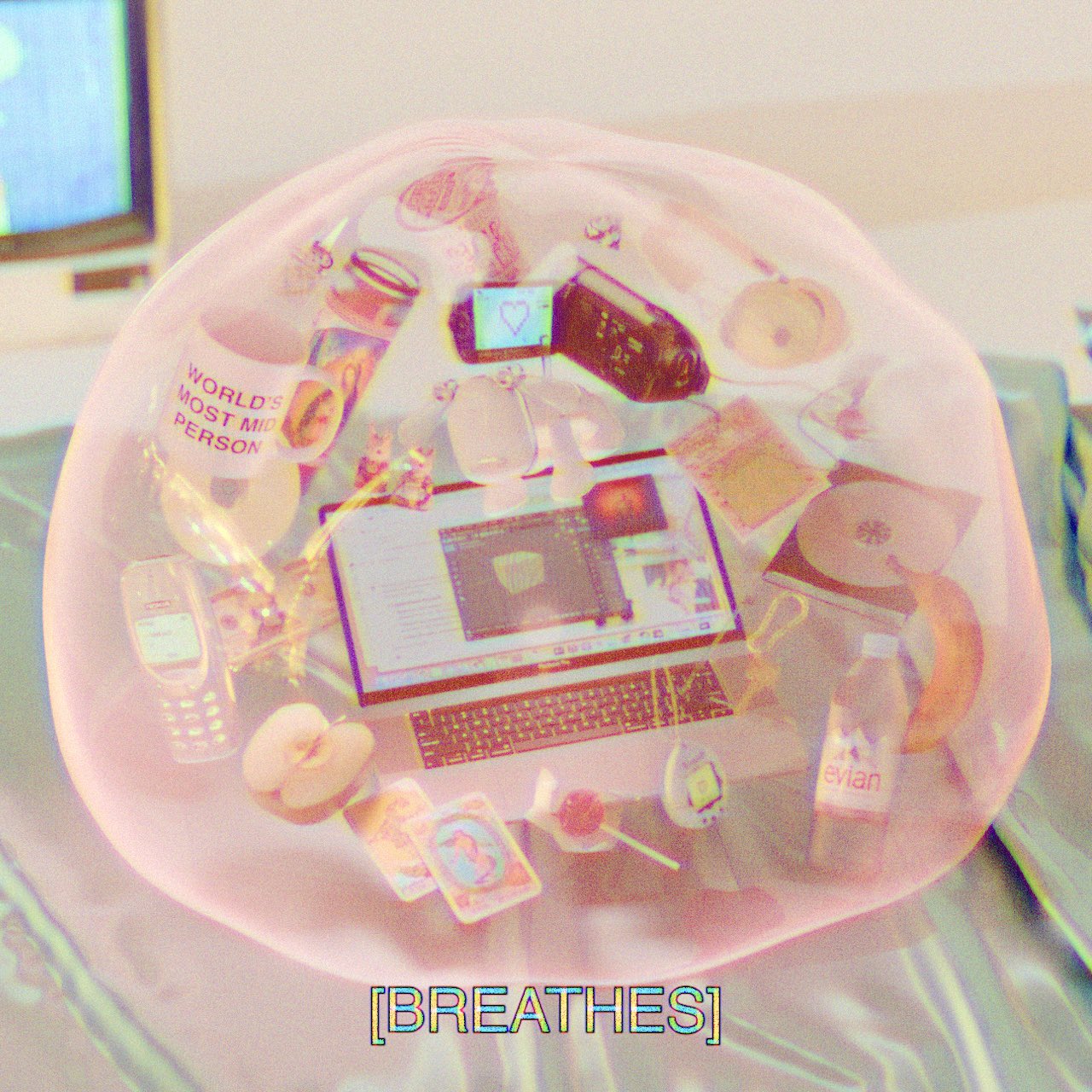
For example, one of my earlier pieces, Things I Can't Remember, came from graduating college and moving back home. On paper, all of these milestones were happening that should have made my life feel distinctly different, but internally, everything still felt like one continuous blur. I was older, but I still felt like the same person I had been at five years old. With The All-Consuming Blob, I was thinking about how much of ourselves is made up of everything we consume—images and algorithms, trends and other people—and how difficult it can be to separate what is actually you from what you’ve absorbed. I usually place those feelings inside intimate, domestic environments like bedrooms or kitchens, often around desks and other familiar objects. I’ve made most of my work from my bedroom, and I’m endlessly fascinated by the home and all of the objects we surround ourselves with. Those spaces feel like natural containers for the kinds of thoughts I’m interested in. From there, I start building in Blender and let the idea develop as I’m working. I actually introduce materials and color very early in the process, along with lighting, which I think is a little backwards compared to how a lot of people work in 3D. Then I start working with movement and camera, rendering things over and over and making tiny adjustments until the world finally feels the way the original thought felt.
There’s an early-internet, digital nostalgia theme that runs through a lot of your work, but it also feels reflective rather than referential. Where does that come from for you? Is there an era of the internet that you pull from as source material?
I think my relationship with technology became a subject in my work almost accidentally. When I started learning Blender, I was spending so much time alone at my computer that naturally I started making work about that experience. Before 3D, I didn’t really consider myself an artist. I was playing around in Photoshop and making graphics, teaching myself things because I enjoyed it. Learning Blender was really just another extension of that curiosity, but I became completely obsessed with it. The more time I spent at the computer, the more I started thinking about how dependent I was on technology, but also how much the technology depended on me to give it meaning. And there’s something intimate about that relationship. That goes back to childhood, too. Growing up in the 2000s, I was always using computers as a creative outlet. I would make PowerPoints with my friends for fun or edit little movies in Windows Movie Maker. I’d play The Sims and just spend hours online. I’ve always loved meticulous, tedious digital processes. They’re where I feel like I can express myself best. I’m definitely fond of the technology and visual language I grew up with, so naturally I’m drawn to it and inspired by it. It feels familiar to me because I have real memories attached to it. I think that nostalgia becomes part of the work almost instinctively, rather than something I’m consciously trying to reference.
How do you approach color when creating?
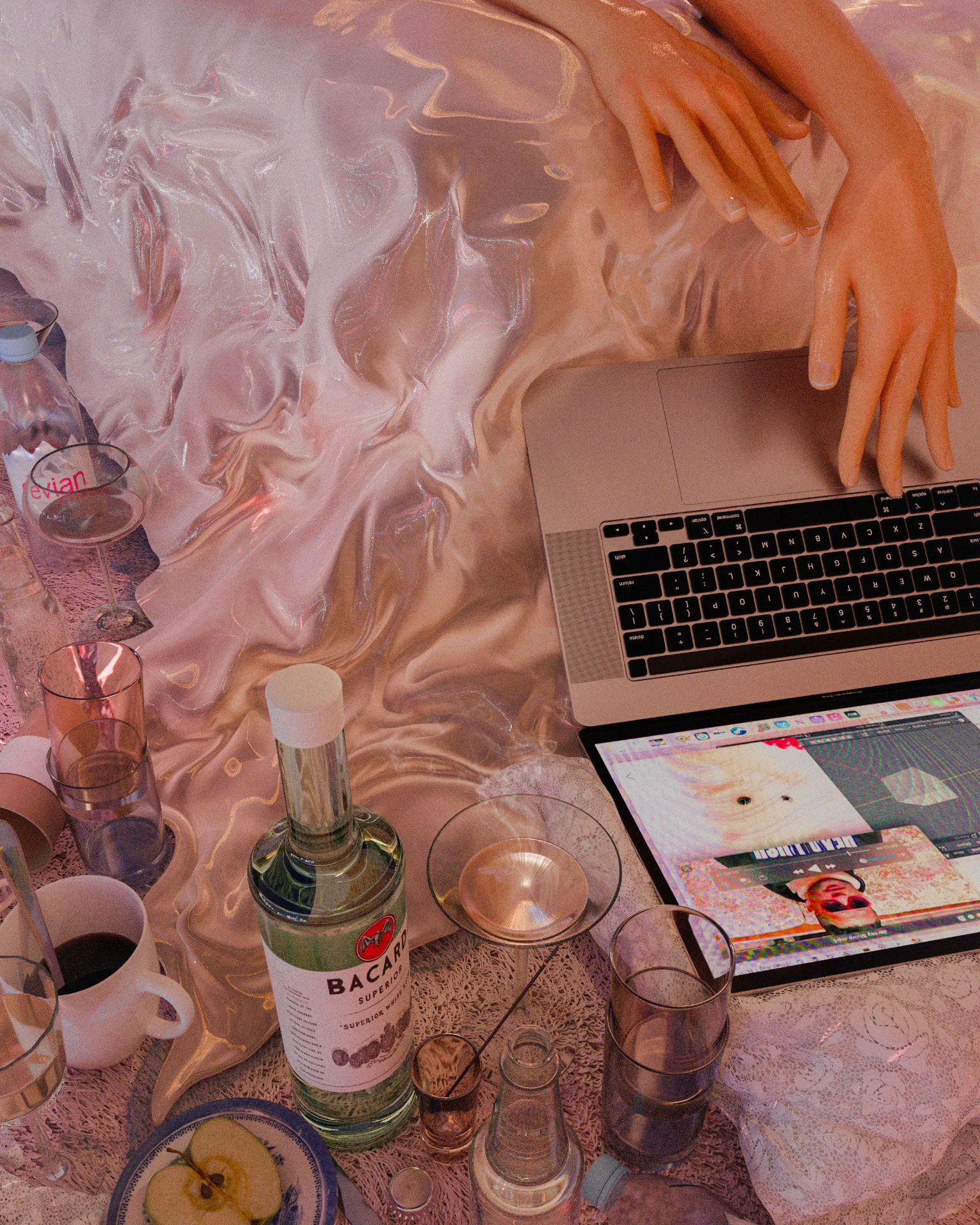
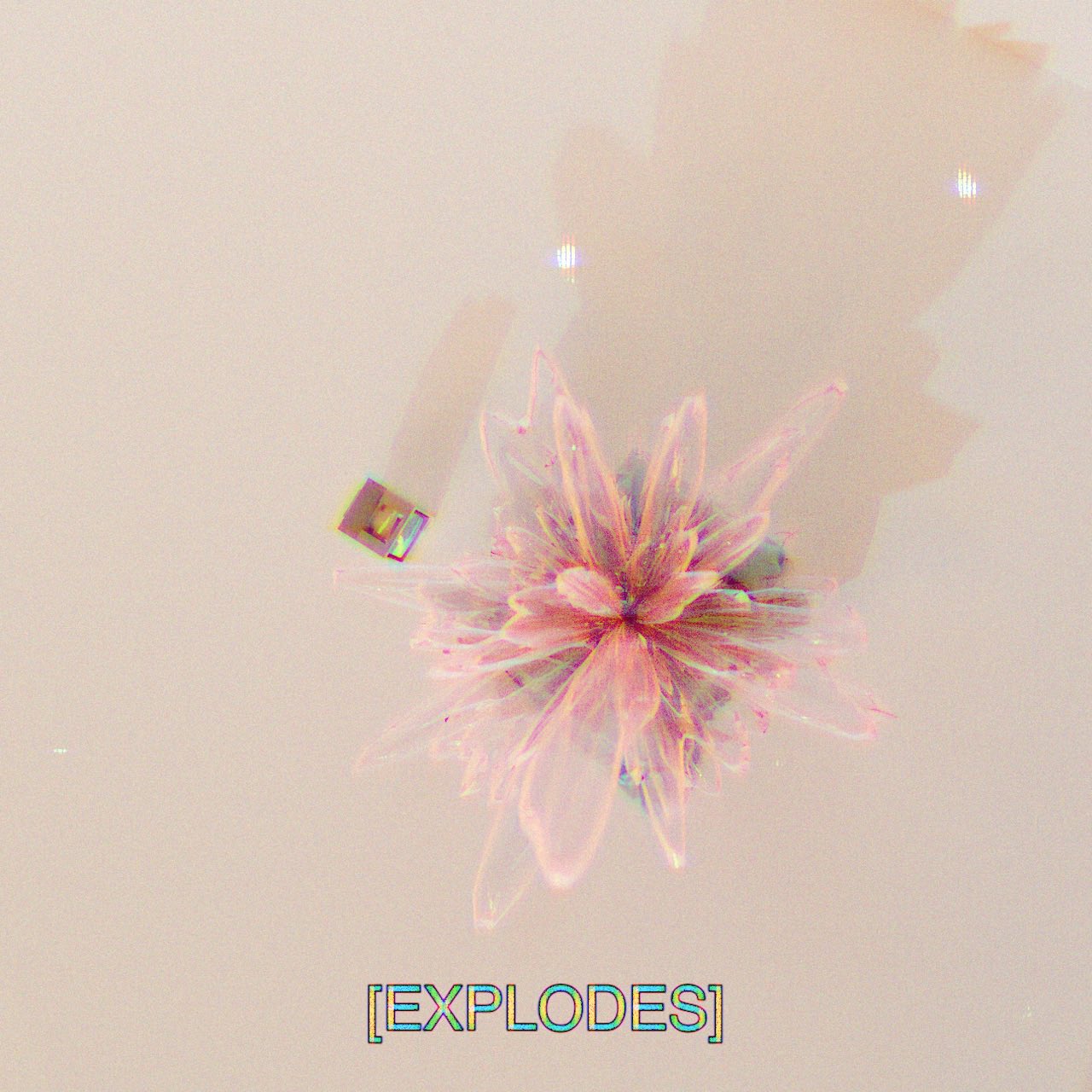
As simple as it sounds, I think I make things that I want to see in the world. I’m drawn to softness and low contrast, translucency and shimmer, reflected light, and things that feel peaceful or harmonious to me. Color is a huge part of how I create that feeling. I also like using beauty and softness around subjects that aren’t necessarily beautiful or soft. My piece Bed Rot is probably the clearest example. The piece is about spending an entire day in bed. There’s cups piling up and food being delivered. It’s about sitting on your computer binge-watching Jersey Shore and accepting a kind of complete non-productivity. “Bed rot” can sound messy or indulgent on the surface, but there can also be comfort and relief in it. So instead of making that environment dark or grimy, I approached it with a lot of care. The sheets are soft pink and the room is filled with gentle light. The cups refract the light into little rainbows. I love that contrast of taking something mundane or messy, even slightly embarrassing, and treating it with tenderness. I think that’s what my palette does across a lot of my work, it creates a kind of softness around whatever I’m examining and lets me look at it from a different angle.
How much of your work is rooted in your personal experience?
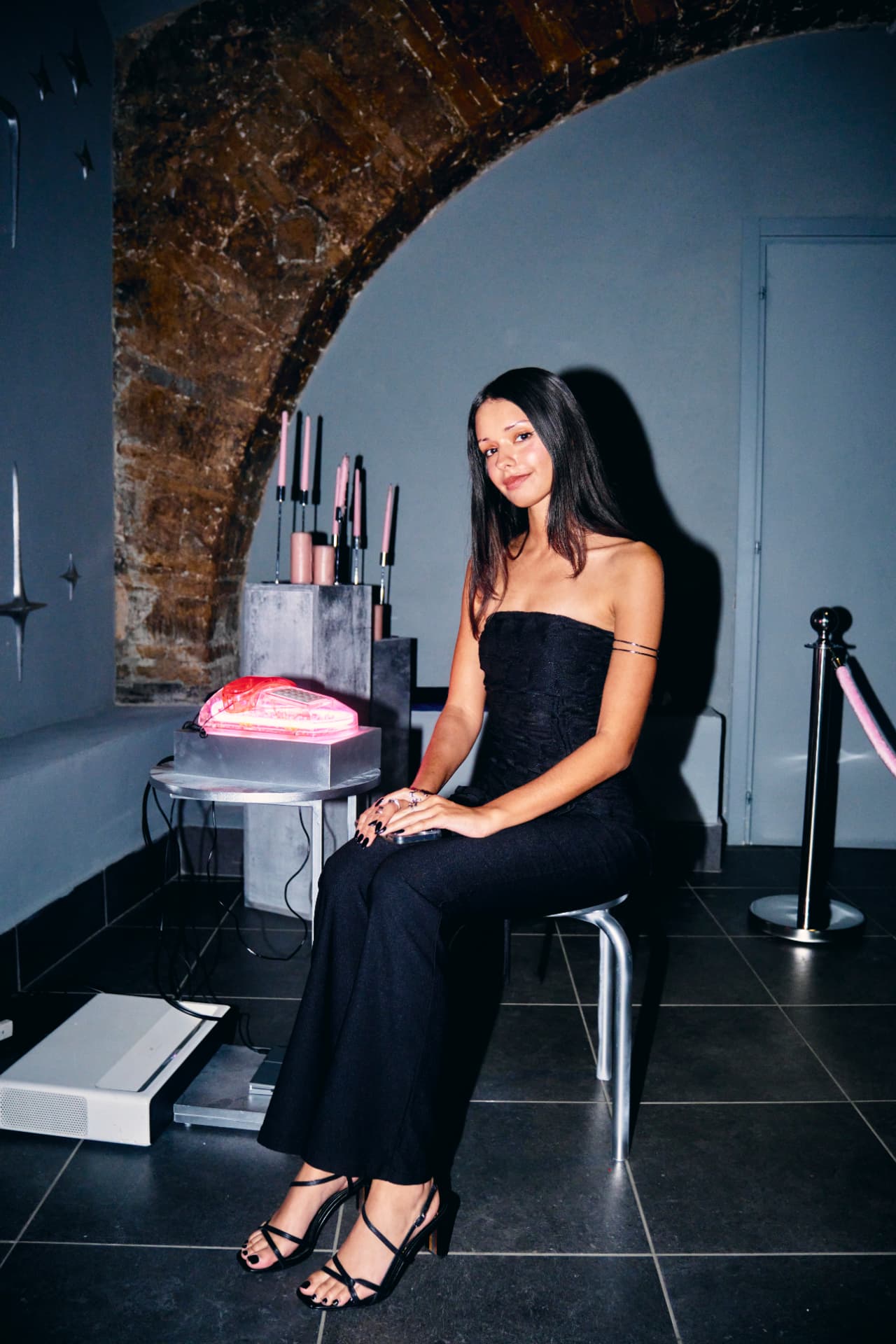
A lot of it does, although not always in a literal or autobiographical way. I think I’m usually visualizing my active thoughts and fixations along with observations and the questions that I keep thinking about. I’m interested in these feelings that are incredibly common but difficult to put into words, like wanting reassurance or assigning meaning to things. I’m also interested in depending on objects for comfort, or wondering why something feels so personal when logically it shouldn’t. In my animation The Moon, for example, I was thinking about how humans have assigned this enormous amount of meaning to something so physically distant from us. It’s literally in another world, but we look at it for guidance and attach emotion to its phases. We make wishes on it and somehow feel personally connected to it. I find that the need to create meaning is really moving. My most recent interactive work, Liv’s Psychic Hotline, comes from a similar question. It looks at all the external places we turn when we want certainty or reassurance, like horoscopes and tarot readings, psychics and algorithms, or even ChatGPT. We know those things can’t necessarily give us definitive answers, but sometimes what we’re really looking for is permission or validation, or a way of hearing something we already know.