Parking Lot Press is a Thai publishing collective founded by four designers and illustrators with a shared love of printed matter. Through zines and experimental formats, the collective explores playful approaches to storytelling, drawing on Thai culture and subculture to reinterpret local narratives and everyday observations.
Workshops and collective making seem to be an important part of your practice. Where did that interest in creating spaces for people to learn and make together begin, and what has that exchange come to mean to you?
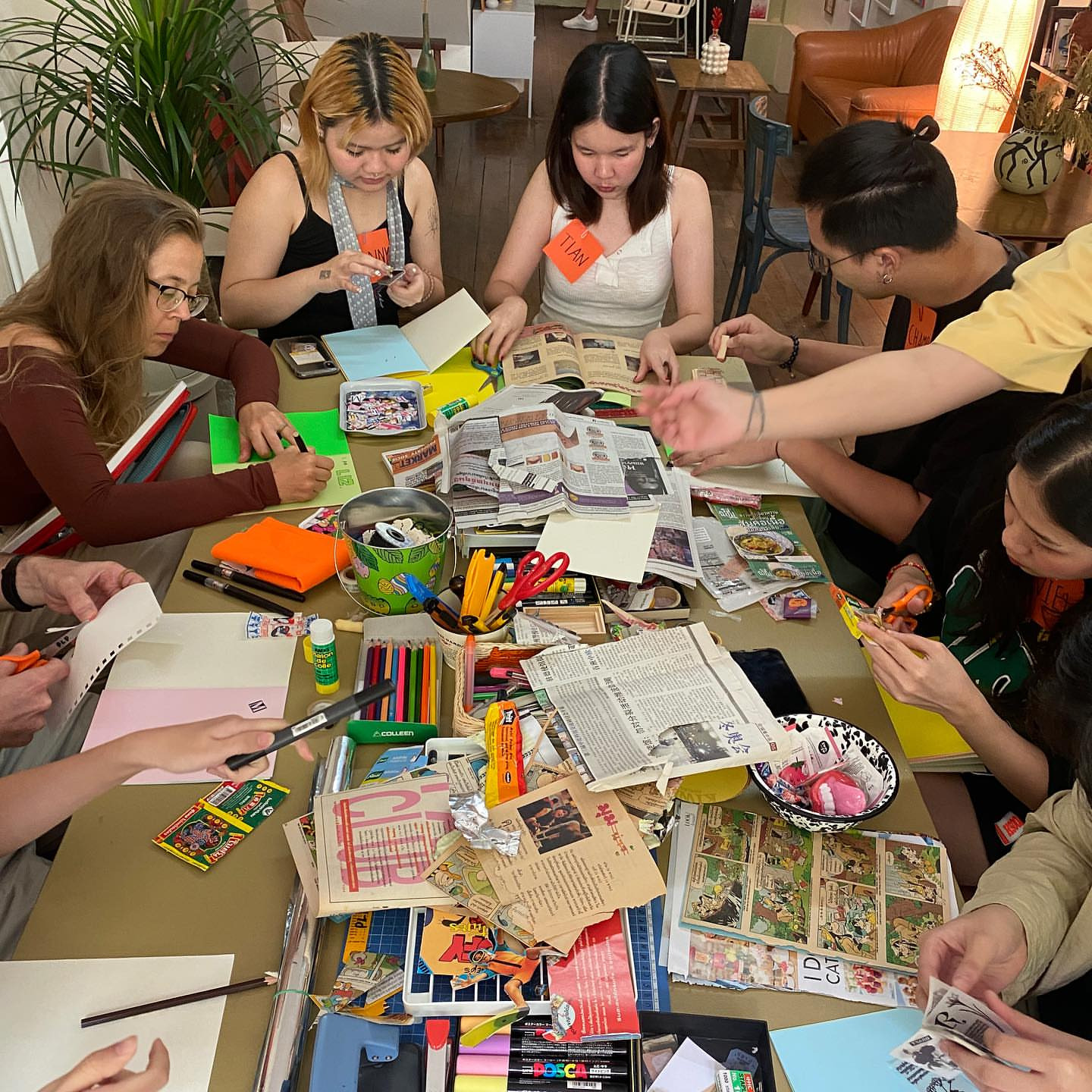
It all started with our love for printing back in design school. After graduating and starting Parking Lot Press, we realised that zines and print publishing were still quite niche in Bangkok compared to other areas of design. Making an art book or even a small zine often felt like a big deal, and we wanted to make the process more accessible. That’s why we started our zine-making workshop. We wanted anyone, not just people in the design field, to have a chance to make their own mini zine from scratch and feel more confident about creating publications. We also wanted to get more people interested in print and physical media. Through the workshops, we’ve met people from all kinds of backgrounds, from writers and designers to illustrators and even a dentist. Everyone brings their own stories and perspectives, and we learn just as much from the participants as they do from the process. It’s become a space to share ideas, stories, and the experience of making something together.
With four of you making work together, how do you arrive at a shared visual style?
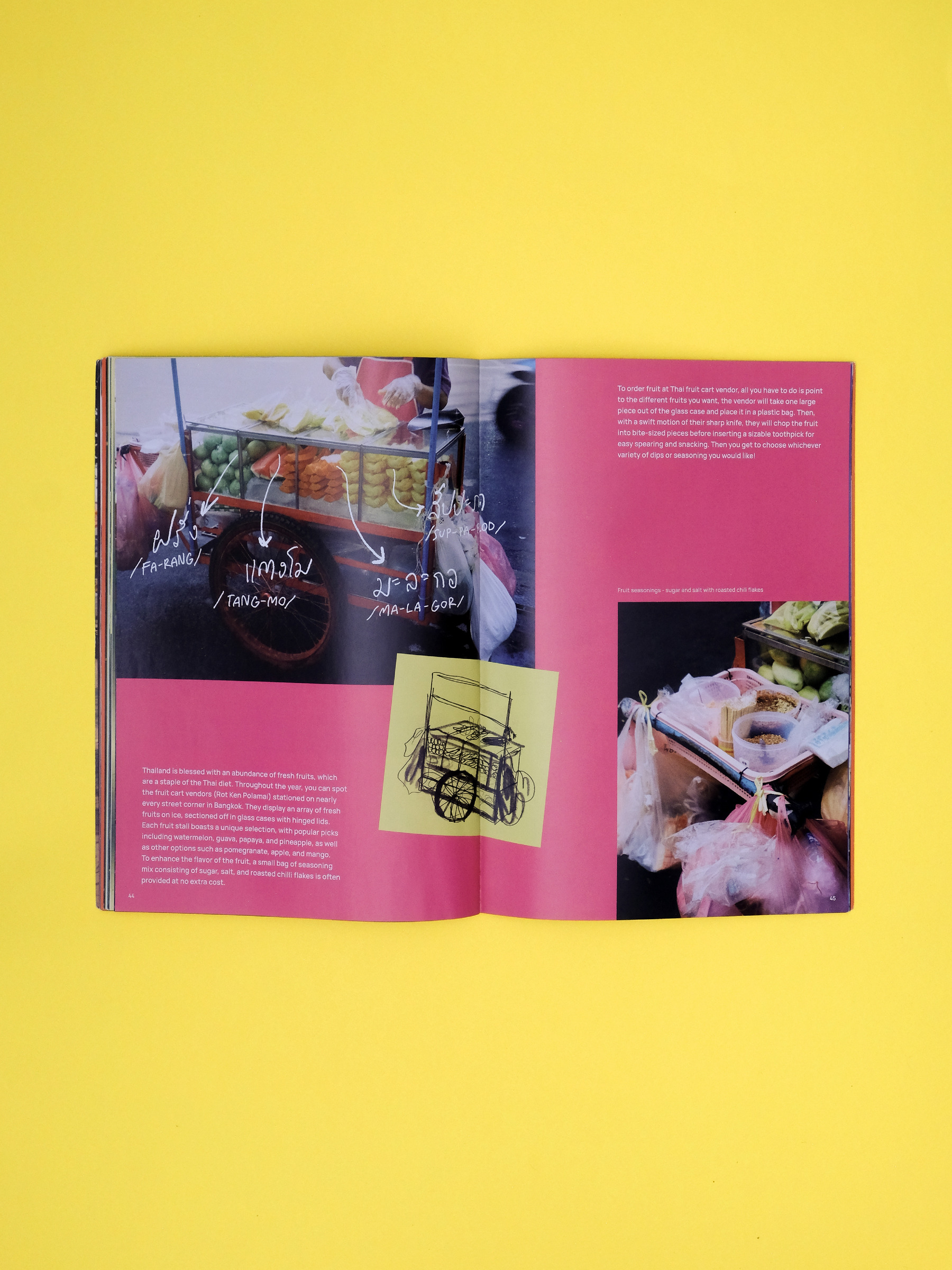
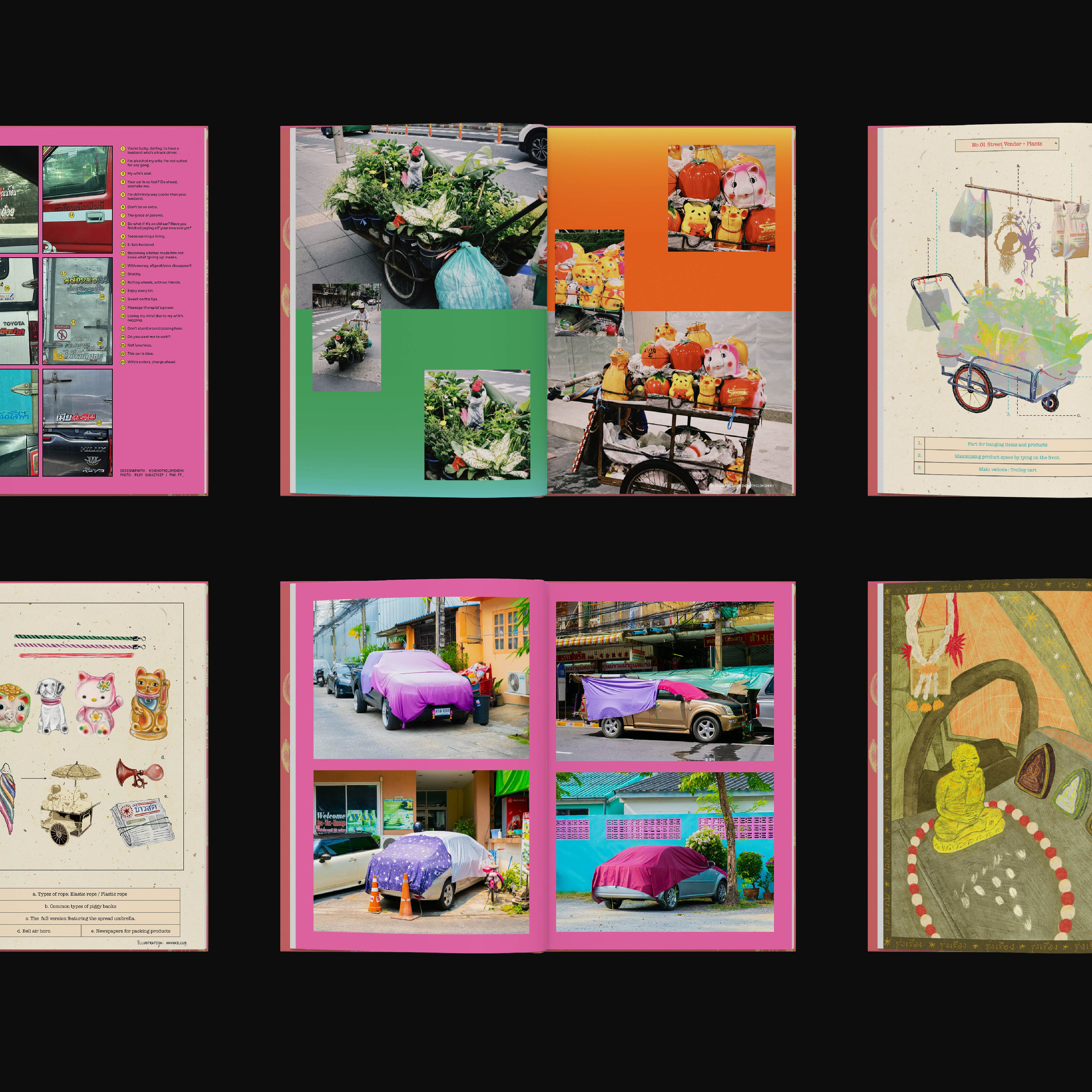
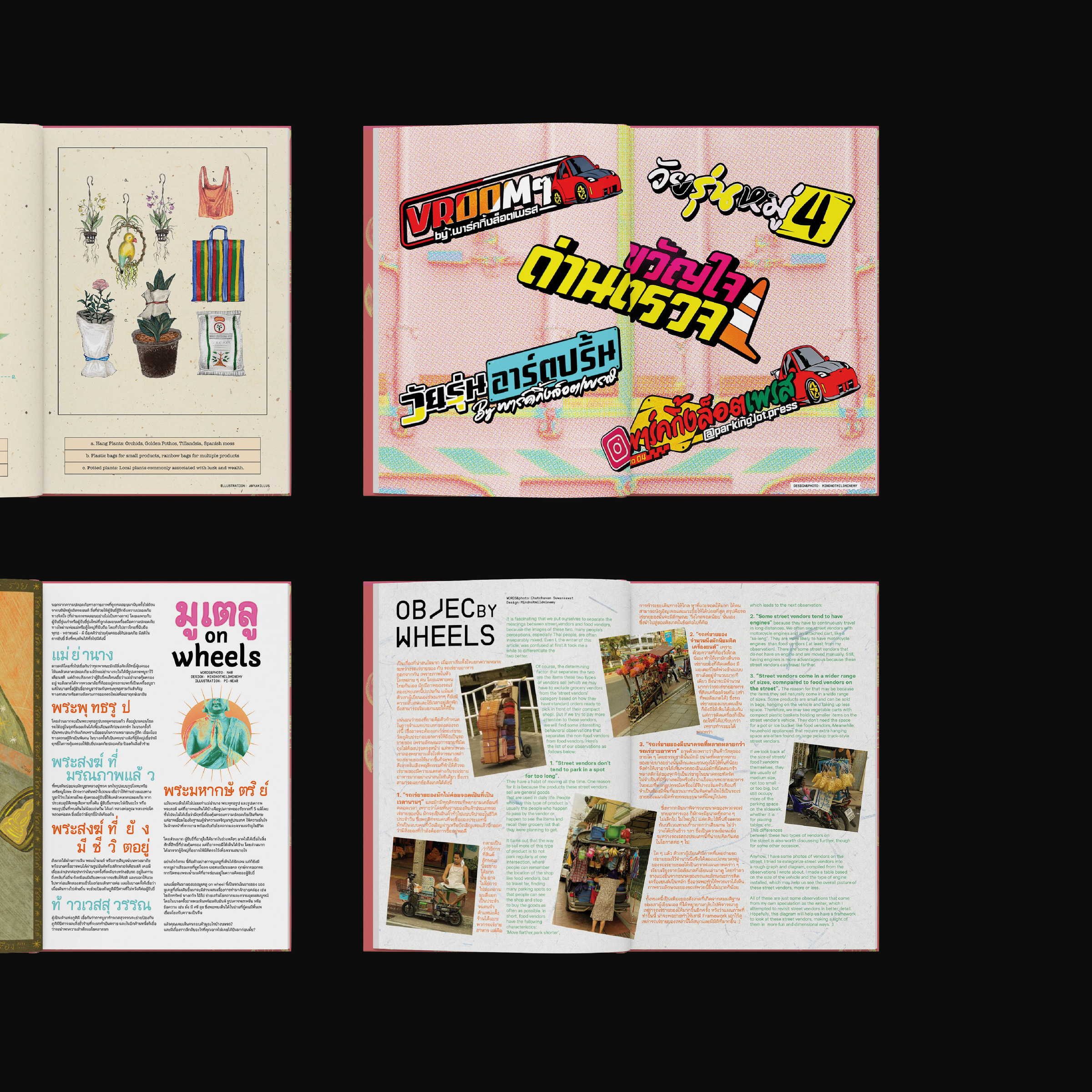
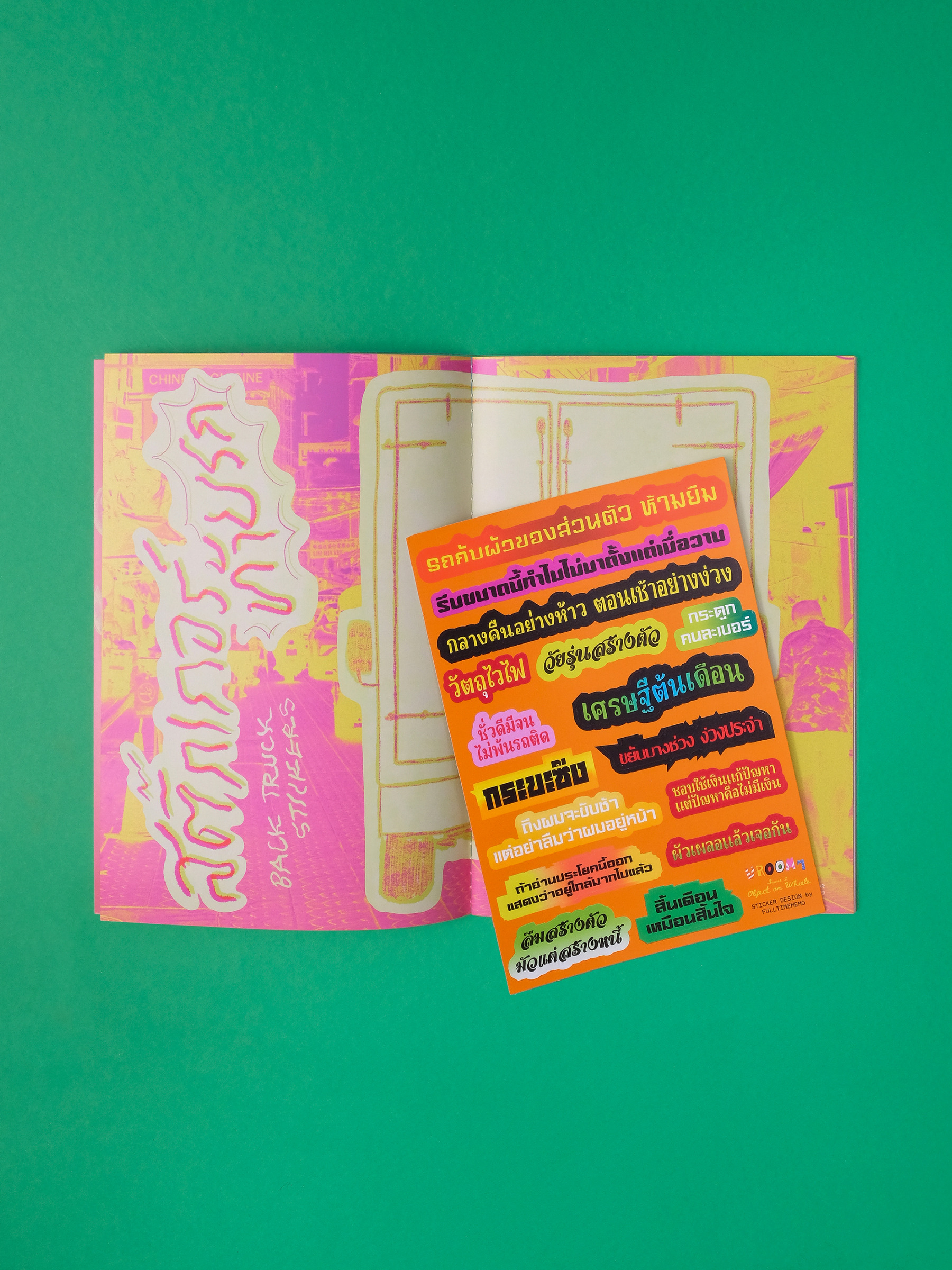
We all studied at the same design school and majored in the same subject, but our visual styles are quite different. Two of us focus more on graphic design, while the other two are into illustration. What brings us together is our shared interest in print, hands-on processes, everyday objects, and cultural topics. We each make our own zines to explore our individual interests, while our annual magazine, VROOMๆ (Vroom Vroom), is where our interests come together. It explores Thai culture and everyday life in Bangkok through articles, photography, graphic design, and illustration. Rather than trying to make our work look the same, we like combining a little bit of this and that. We want the magazine to capture Bangkok’s multicultural character, vibrant colours, and unexpected moments. Just like the city itself, our different styles come together to create something unique.
There’s something almost rebellious about committing to a tactile, labor-intensive form like print right now, when so much creative work is becoming immaterial. Do you feel that tension in your practice, and has it changed what publishing means to you?
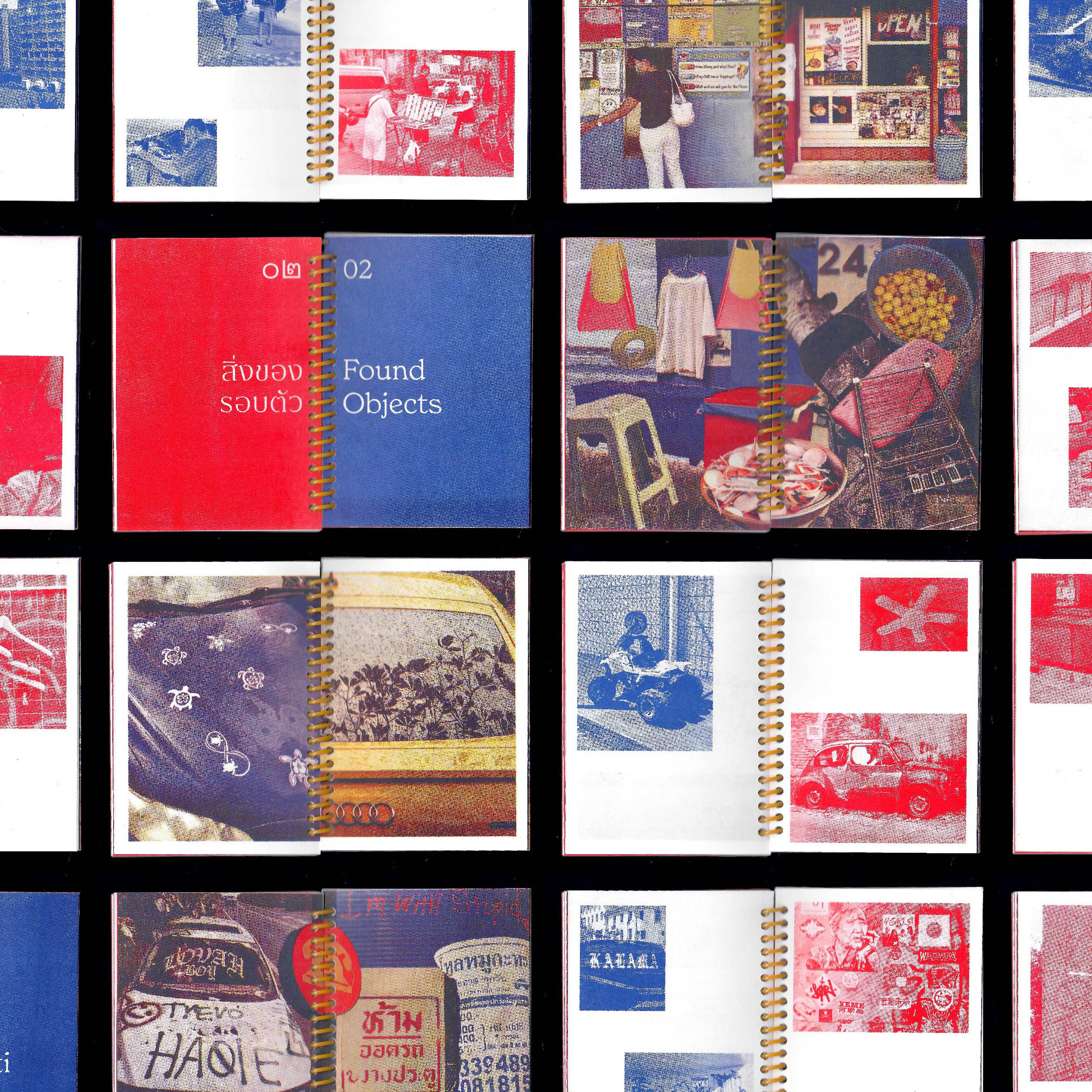
We grew up at a time when print was everywhere. Teen magazines, comics, and books were a big part of everyday life, so naturally, we grew attached to print. But we don’t see it as print versus digital. We think each medium has its own purpose, and both are meaningful in different ways. We don’t feel that choosing print means going against the digital world. For us, it’s more about enjoying the process, from experimenting with techniques like risograph, embossing, and silkscreen to seeing everything come together. For us, publishing is about more than the final printed piece. It’s about developing an idea and finding ways to communicate it through print and paper. That’s what makes it meaningful to us.
What ideas or questions are you most interested in exploring through the press right now?
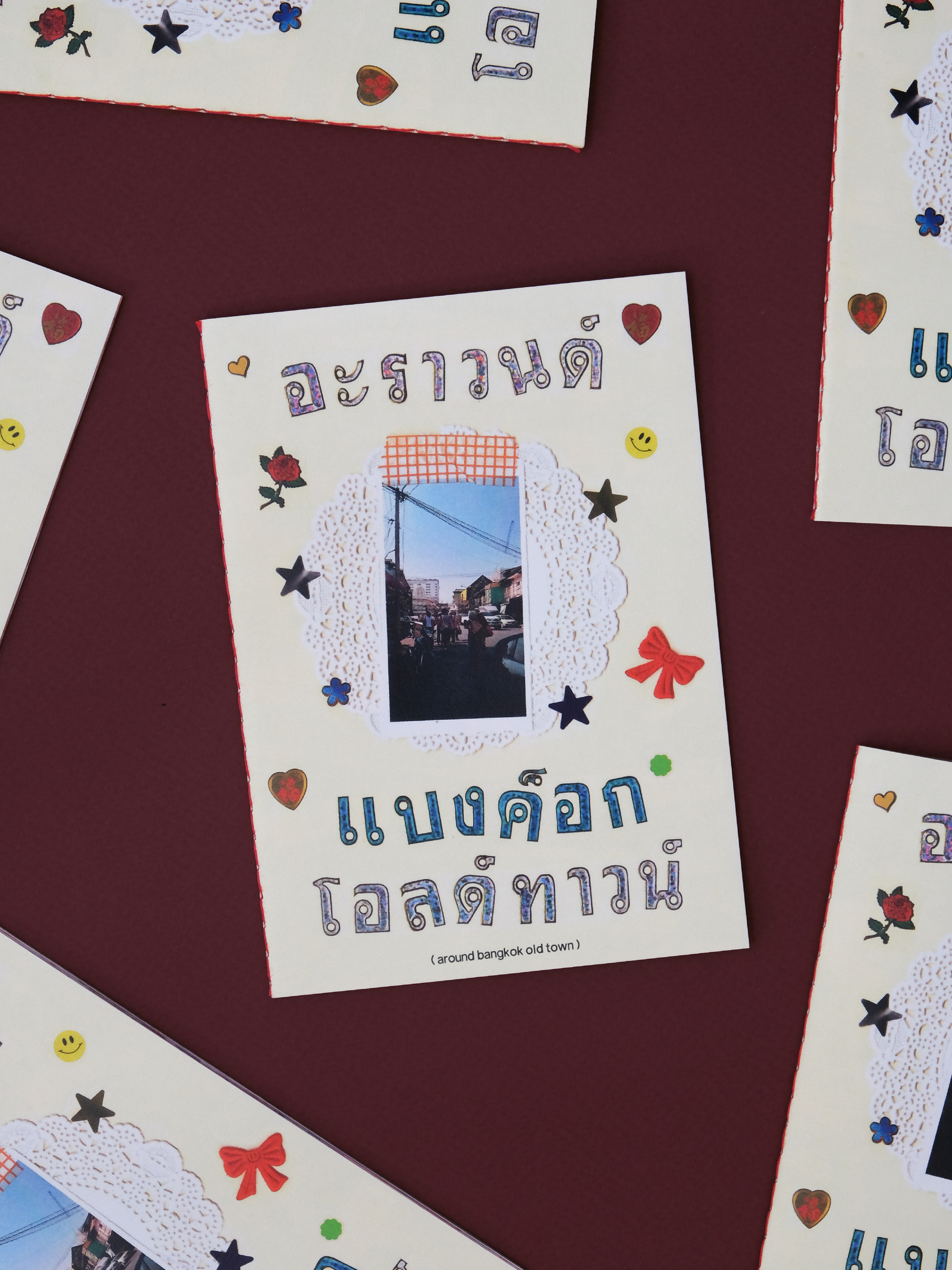
We’re still interested in exploring everyday objects and culture, especially the things we see around us but don’t always pay much attention to. There are so many topics we’d love to explore further, from Thai-Chinese communities, which we’re also part of, to different subcultures in Bangkok. We’re always observing the city and getting curious about all kinds of things. Sometimes, a small detail or an ordinary object can lead us to a bigger story about the people, culture, or way of life around it. We don’t always start with a specific question or know exactly where an idea will take us, and that’s what makes it exciting. We want to keep following our curiosity and see where it leads us next.
Imagery courtesy of Parking Lot Press. Photography by @fadafunu.