Oonagh O’Brien (she/her) is a Dublin-based multimedia artist whose art is grounded in experimentation, placing process ahead of outcome. Her practice is in ongoing development, which is why she often finds it difficult to define her work.
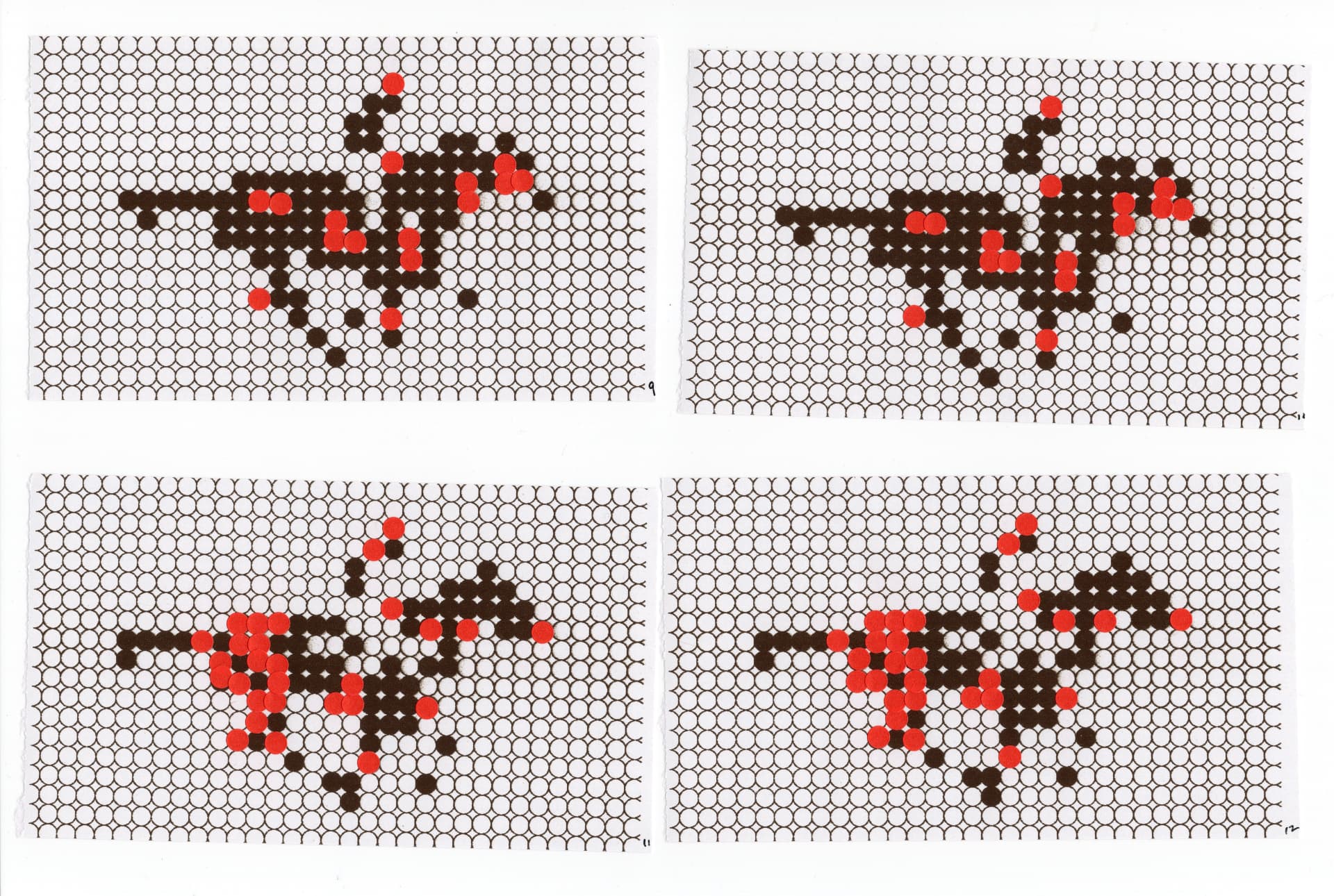
I’m interested in where the intervention begins in your process. With a piece like your Muybridge animation, for example, does the source material spark the idea for how you’ll alter it, or do you begin with an idea and look for imagery to work through? How much of the transformation do you discover through making?
A lot of my outcome comes from serendipity, as I tend to work off pure intuition. Typically, I don’t follow a streamlined process, but for the Muybridge animation, I remember trying to. Initially, I coded a paint-by-numbers animation made up of ellipses. I had red dot stickers that I wanted to use as an accent for the physical output. I was disappointed with how it turned out, so I digitally removed everything except for the red dots via colour keying. I then overlaid them onto the original Muybridge animation. I think this is a great example of my process. I often don’t have a strong sense of what the outcome is going to be. If I do, I tend to be dissatisfied with the output. I tend to play around a lot until eventually something arises.
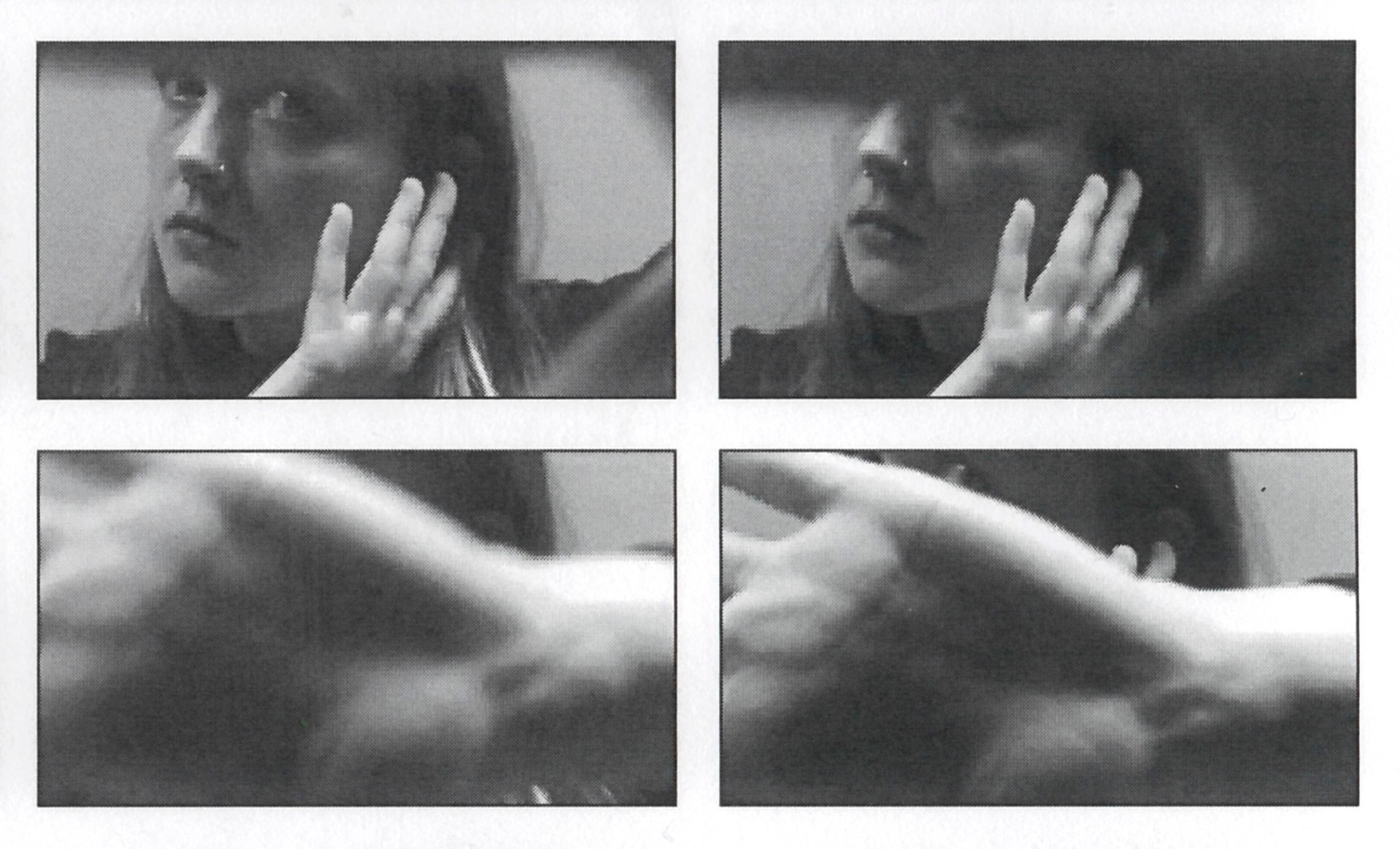
Hands, eyes, faces, and the body appear throughout your work. What draws you to those forms?
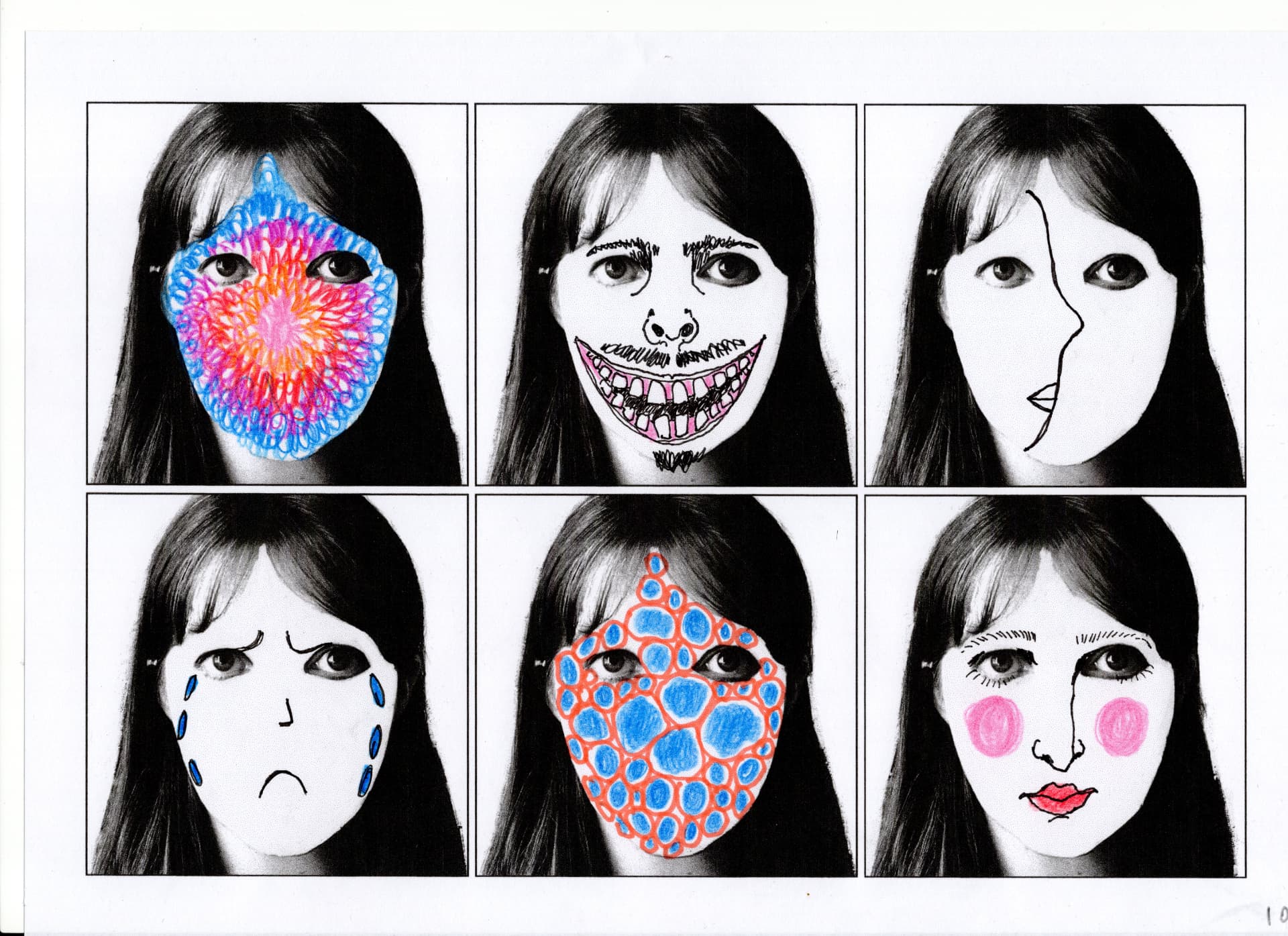
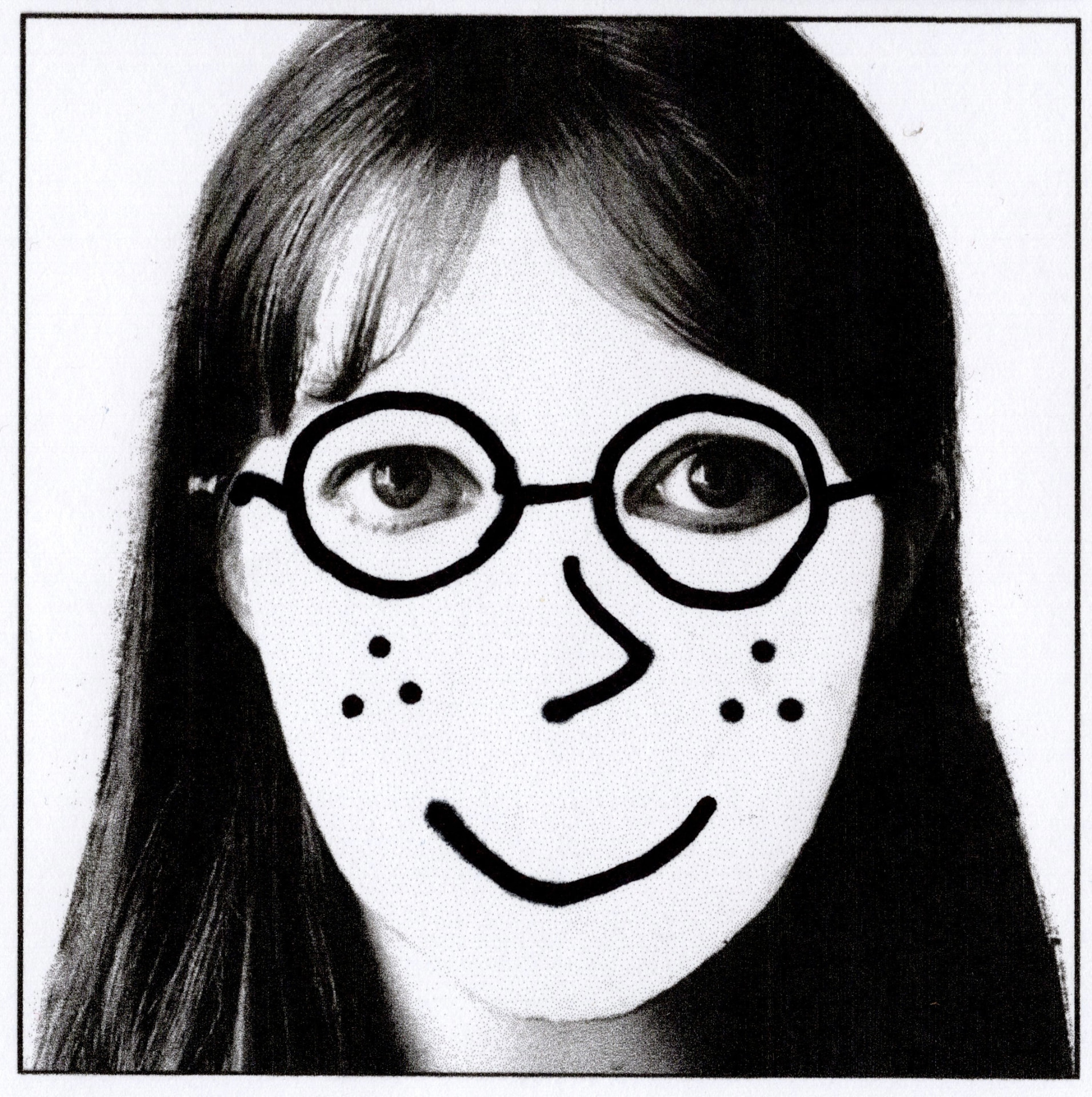
I am aware that I use these motifs quite a lot, and I’m not entirely sure why that is. If I had to guess, I would say that a large body of my work is autoethnographic. Using motifs such as my hands or eyes allows me to literally insert myself into my work—a dismembered version of myself. I have always preferred to work alone. When it comes to getting source footage, I find it easier to just film my own face and hands instead of asking someone if I can film them for my work. I also find it difficult to convey what I want to other people, especially in a creative capacity. I would be more open to collaboration now. Doing freelance work has taught me to collaborate with clients and other artists in many ways. I am having a lot of fun with it and would be open to collaborating on personal artistic projects someday.
Mixed-media work can become very specific to the person making it. How has your way of working changed as you’ve introduced new materials or techniques?
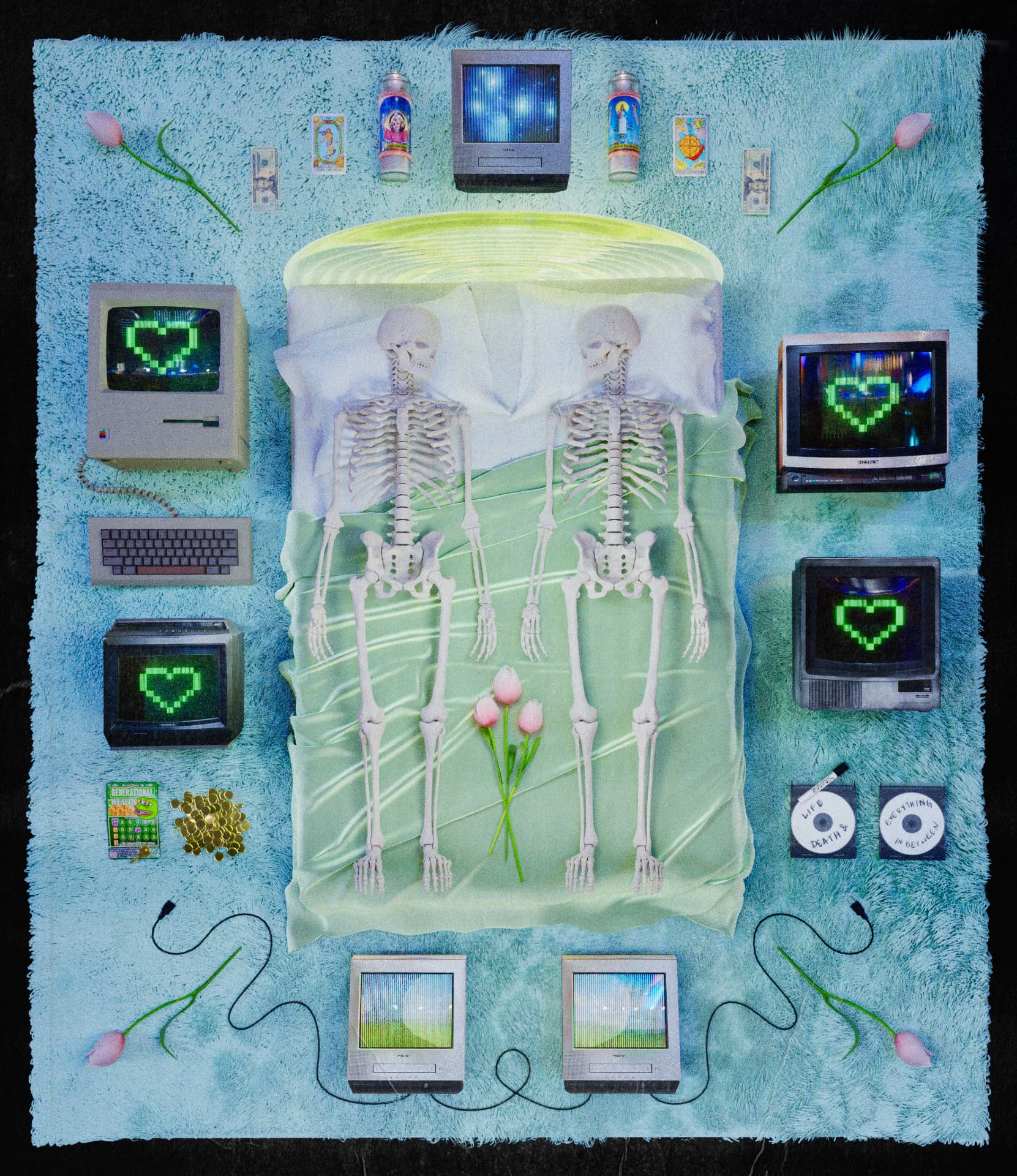
My practice really took off when I started experimenting with tactile materials and combining digital and analog methods. I learned how to do basic code when I did my master’s in Music and Media Technologies, which further expanded my practice. It was another way for me to begin a project digitally and apply mixed media methods to create interesting outcomes. I thought that my work would suffer once I graduated college because I heavily relied on the facilities, but I find that I work well with limitations because I enjoy experimenting with what I have. I often work with random images or videos on my camera roll. I also return to old ideas and unfinished projects. Because I create a high volume of work through experimenting, I tend to always have material to work with. My work can become a multimedia process that does not begin one way over the other. Rather, it is solely dependent on the project I am working on and what ideas come to me first.
What kinds of subjects or ideas have been showing up most in your work lately?
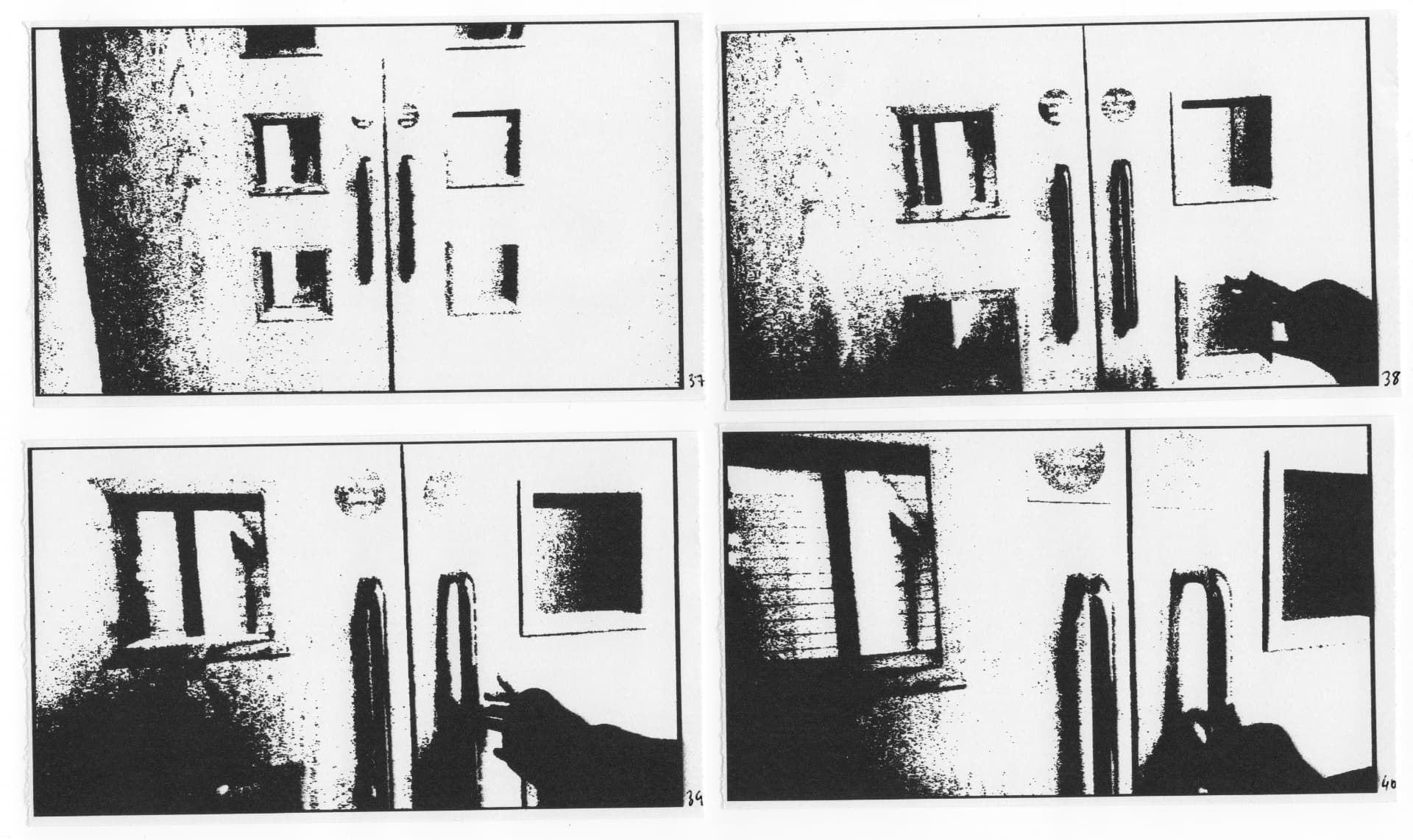
My work is usually a reflection of how I am feeling. I am a very lighthearted person in real life and find it hard to communicate my feelings in a sincere capacity, which has often made me feel very alone. I like to explore visually articulating how I feel in ways that are meaningful to me, and I am glad it can resonate with others sometimes. I also enjoy challenging my creativity with minimal materials. When I believe that I cannot execute an idea due to limitations, like equipment or space, I try to fulfill the idea with what I have. The outcome typically looks entirely different from what I wanted, but the unexpected outcomes are what excite me the most. When my ideas are fulfilled with ease, I feel like I didn’t engage enough with the process. My favourite thing about creating is that any small piece of material can be used to create endless outcomes. Those outcomes can then be used to create even more.